Two Cities, Two Ways of Reading the Past
In the province of Jaén, olive-covered countryside surrounds two cities whose old quarters reward slow, attentive walking. Úbeda and Baeza share a UNESCO World Heritage designation for their Renaissance monumental ensembles, but each offers a distinct encounter with the past.
Úbeda often feels like a statement of personal ambition. Its great squares and palaces reflect the wealth of families who rose through royal service. Baeza has a more ecclesiastical and scholarly character, with cathedral precincts, former university buildings and narrow streets that invite you to look beyond the main facade.
Neither city began with the Renaissance. Their street plans and surviving structures preserve traces of medieval Islamic rule and the Christian conquests of the thirteenth century. The sixteenth-century buildings were additions to places already rich in memory.
The most revealing stories are not necessarily concealed indoors. A coat of arms, a reused column or the position of a chapel can tell you who held power, how they wanted to be remembered and what earlier generations left behind.
Úbeda: A Royal Secretary’s Lasting Ambition
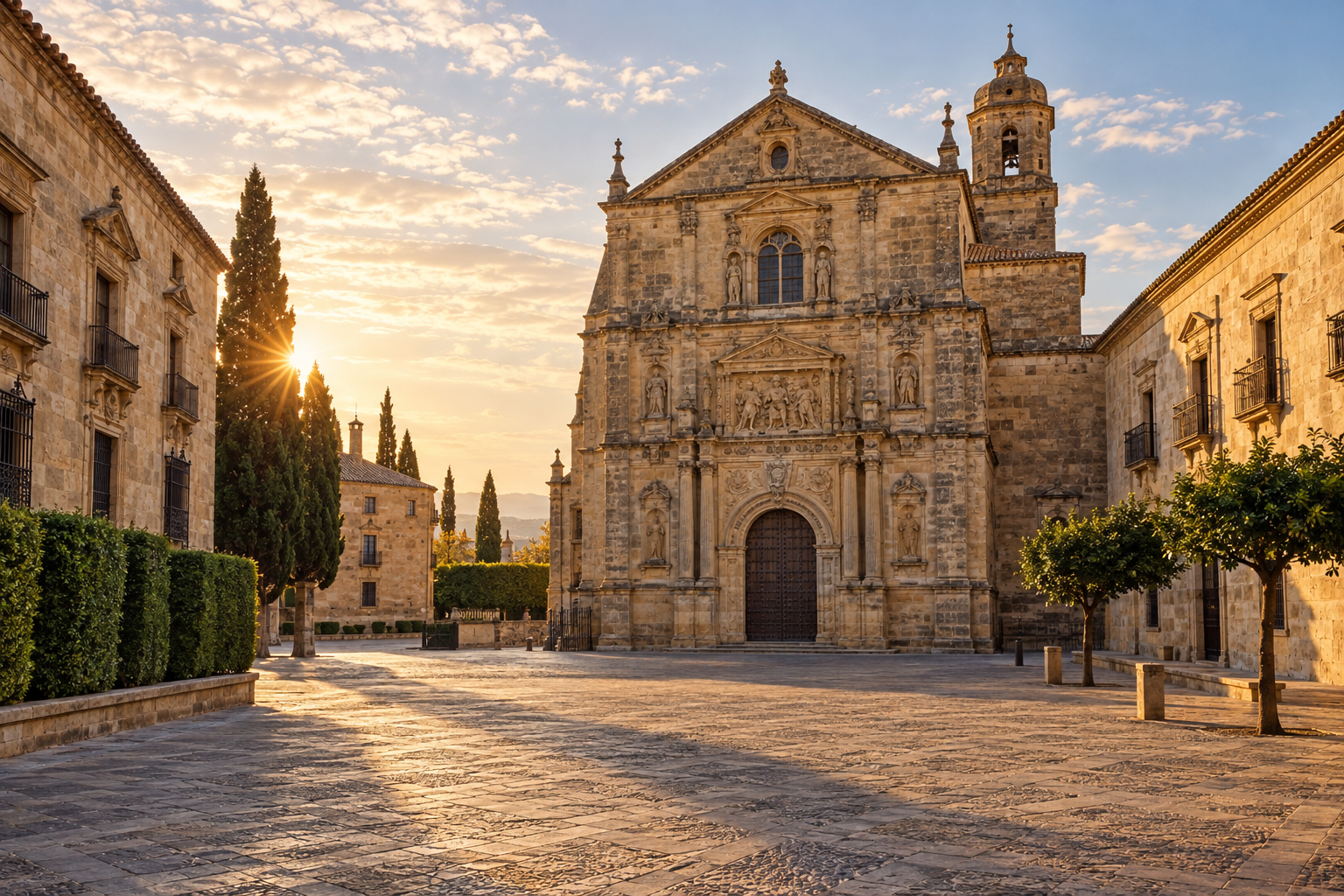
Begin in Plaza Vázquez de Molina, where monumental buildings frame one of Andalusia’s most remarkable urban spaces. Rather than treating it as a collection of separate sights, read the square as a conversation about authority, faith and reputation.
The Sacred Chapel of El Salvador is central to that story. Francisco de los Cobos, a powerful secretary to Emperor Charles V, commissioned it as a funerary chapel. His rise brought the resources and connections needed to create a monument that made a lasting statement in his home city.
Diego de Siloé supplied the initial design, while Andrés de Vandelvira played a major role in its execution. The result belongs to the wider Renaissance culture of proportion, classical forms and carefully arranged imagery, adapted to a deeply religious purpose.
Pause before the sculpted entrance. The building was intended not only for worship, but also for remembrance. Its richness makes more sense when you consider the determination of a successful court official to secure a lasting place in his home city.
Nearby, the Palacio de las Cadenas, also known as the Palacio Vázquez de Molina, expresses a related confidence through its ordered stone facade. Commissioned by Juan Vázquez de Molina, another prominent royal secretary, it now serves as Úbeda’s town hall. Together, these buildings show how service at court reshaped a provincial city.
Beyond the Great Square: Older Úbeda Survives
Leave the broad monumental setting and the scale changes. Around Plaza Primero de Mayo, the Church of San Pablo anchors an older civic space. Its mixture of architectural periods is a useful reminder that Renaissance Úbeda never entirely replaced the medieval town.
Look at the church from more than one side. Differences in entrances, masonry and ornament reveal successive interventions rather than one unified building campaign. In these streets, history is often visible as an accumulation of practical decisions.
The nearby lanes lead past aristocratic houses whose heraldic shields served as public declarations of family identity. A grand doorway mattered: it announced status to everyone passing through the street, including people who would never enter the courtyard beyond it.
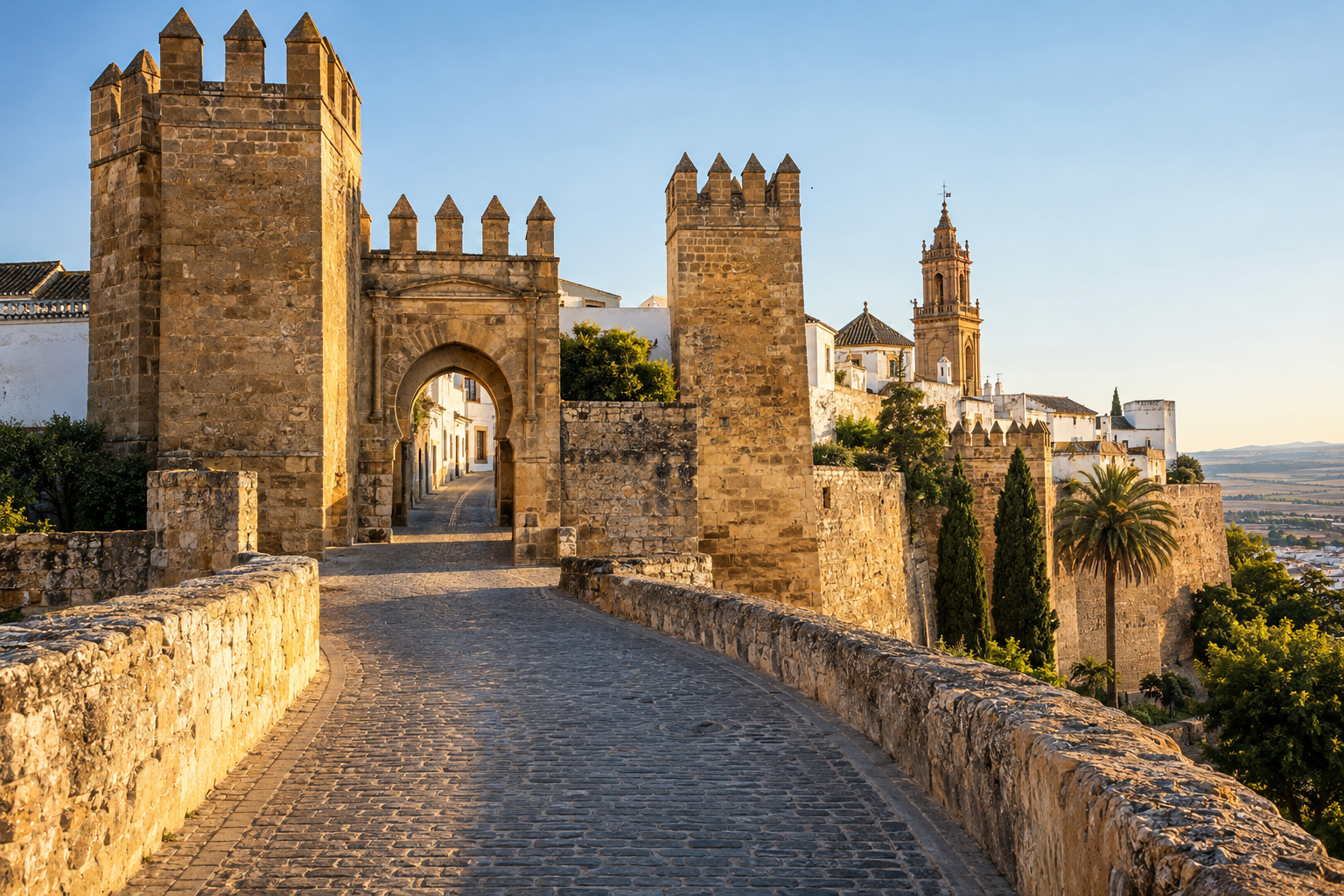
For a different perspective, continue toward the southern edge of the old quarter near the former walls. Views open across the countryside toward the mountains. The contrast helps explain the city’s position: this was an urban center connected to agricultural wealth and a much larger territorial landscape.
As you walk, notice three recurring details:
- Heraldic shields that turn domestic facades into statements of lineage.
- Changes in stonework that mark rebuilding across different periods.
- Sudden views of open country at the edge of enclosed streets.
A private visit with a fluent, knowledgeable English-speaking driver makes it easier to balance these walks with the journey onward to Baeza. You can discuss practical arrival and collection points while leaving time to explore the pedestrian streets on foot.
Let us take you there, privately
Your own Mercedes-Benz and fluent English-speaking driver, on your schedule.
Request a private quoteBaeza: A Cathedral Quarter Built on Earlier Chapters
Baeza’s cathedral precinct feels more enclosed than Úbeda’s great monumental square. Around Plaza de Santa María, buildings gather closely, and the fountain at the center gives the space a strong focal point.
The Cathedral of the Nativity of Our Lady stands on a site associated with the city’s former principal mosque. Its present appearance reflects several building phases, with important Renaissance work by Andrés de Vandelvira. The building records religious and political change, but also the persistence of a prominent sacred site within the city.
Outside, the Fountain of Santa María commemorates the arrival of a public water supply in the sixteenth century. Its classical architectural language makes a civic achievement look monumental. It is worth considering alongside the cathedral: one structure addressed spiritual life, while the other celebrated a practical necessity.
Walk into the narrow lanes behind the cathedral to understand how different this quarter feels away from its formal square. Stone walls, tight corners and restricted views replace the broad compositions of the Renaissance facades.
Nearby stands the Palacio de Jabalquinto, whose elaborate late Gothic frontage offers another reminder that the region’s architectural story cannot be reduced to one style. Its ornamented entrance and heraldic display belong to a world in which noble families expressed status through increasingly ambitious urban residences.
Scholars, Poetry and a Square of Civic Memory
Baeza’s former university adds another strand to the story. Founded in the sixteenth century, the institution made the city a place of learning as well as ecclesiastical power. Its surviving buildings help explain why Baeza feels scholarly even when its streets are quiet.
Centuries later, Antonio Machado taught French in Baeza from 1912 to 1919. His connection with the city brings the narrative closer to modern Spain. The classroom associated with him, preserved in the historic educational complex, recalls a daily working life rather than a grand political event. Check current visitor arrangements if you hope to see it.
Continue to Plaza del Pópulo, where the former civil court and public notaries’ building, the old butcher’s hall and nearby gateways bring several aspects of civic history together. This was a city of legal transactions, commerce and controlled entrances, not simply churches and palaces.
The Fountain of the Lions adds an intriguing note. Its sculpture is traditionally associated with the ancient site of Cástulo, although interpretations of the central figure and the monument’s origins vary. Treat those stories as part of the square’s layered history rather than as settled identifications.
From here, consider a walk toward the Paseo de las Murallas. The open view across the Guadalquivir valley restores the countryside to the story and offers a welcome change of scale after the close-set streets.
Making Time for Both Old Quarters
You can combine Úbeda and Baeza in one carefully paced day, although an overnight stay allows more room for interiors, quieter walks and changing light. Resist filling every hour with monuments. These cities reveal much through the spaces between their principal attractions.
Comfortable shoes matter on uneven paving, and summer visits benefit from earlier walks and a slower midday rhythm. Interior access can change because of religious services, conservation work or local arrangements, so prioritize the buildings most important to you and check current conditions.
Your fluent, knowledgeable English-speaking driver can share historical context during the journey and manage the road logistics between the two cities. Within the oldest streets, walking remains the most rewarding way to explore.
Portugal Magik offers private day tours, multi-day journeys and city or airport transfers in black Mercedes-Benz E-Class, V-Class and Sprinter vehicles. With a fluent, knowledgeable English-speaking driver handling the travel, you can give your attention to the details that make these quarters memorable: a carved doorway, a quiet scholarly courtyard and the olive country beyond the walls.
Let us take you there, privately
Your own Mercedes-Benz and fluent English-speaking driver, on your schedule.
Request a private quoteGood to know
Can you visit Úbeda and Baeza in one day?
Yes. Their proximity makes a combined day practical, especially when you prioritize the main squares and selected monuments. An overnight stay gives you more time for interiors and unhurried walks.
Why do Úbeda and Baeza share UNESCO recognition?
Their Renaissance monumental ensembles illustrate the development of Renaissance architecture and urban ideas in sixteenth-century Spain, with important connections to architectural developments in Latin America.
Are the old quarters best explored on foot?
Yes. Walking lets you appreciate narrow lanes, carved entrances and small architectural details. Expect uneven paving, and arrange practical arrival and collection points outside restricted streets.
What does Portugal Magik provide for a private visit?
Portugal Magik provides private transportation and travel logistics with a fluent, knowledgeable English-speaking driver who shares history and context during the journey. Monument access remains subject to local visitor arrangements.
Let us take you there, privately
Your own Mercedes-Benz and fluent English-speaking driver, on your schedule.
Request a private quoteSignature Journeys
Prefer a ready-made private itinerary?
See our signature journeys, starting from €2,950