A Hilltop Town With a Roman Past
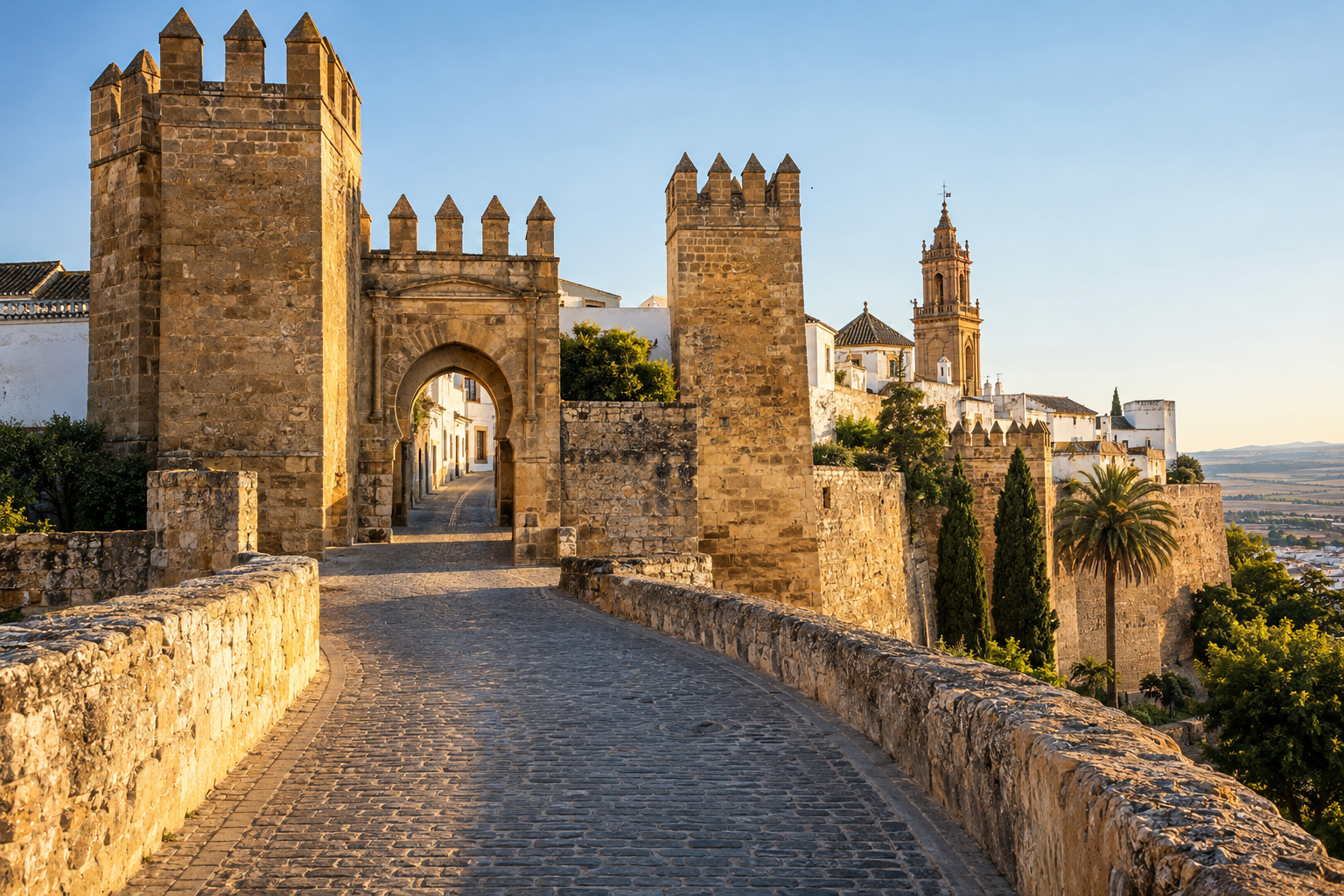
Medina Sidonia rises above the countryside of Cádiz province, its white buildings gathered around a prominent hill. From a distance, the church and ruined fortifications draw your eye upward. Yet some of the town’s most revealing historical remains lie beneath its streets, where Roman infrastructure survives below the later Andalusian settlement.
For you as a visitor, that contrast is the attraction. Medina Sidonia offers more than a collection of ancient objects: it lets you consider how successive communities occupied, adapted and rebuilt the same elevated site. A walk can take you from Roman paving to medieval gateways and then to broad views across farmland.
The town rewards an unhurried visit, especially if your interest in Roman history extends beyond amphitheaters and monumental temples. Here, drainage channels, street surfaces and archaeological fragments bring everyday urban life into focus. They reveal the practical work behind a functioning town, much of it designed to remain out of sight.
Asido Caesarina: Understanding the Roman Town
Medina Sidonia occupies a site with a history older than Roman rule. Its ancient identity is associated with Asido, and during the Roman period it became known as Asido Caesarina. The name connects the modern town with the wider Roman world of southern Iberia, much of which belonged to the province of Baetica.
Baetica was an important part of the empire, with prosperous cities, agricultural estates and commercial connections reaching far beyond the peninsula. Medina Sidonia’s Roman remains belong within that regional story, although the surviving archaeology here is more intimate in scale than the extensive ruins at Baelo Claudia on the Cádiz coast.
The distinction matters when planning your visit. You should not expect a fully exposed Roman city spread across an open landscape. Ancient Asido lies beneath a living town, and what you see consists of selected windows into its earlier fabric.
Its hilltop position also gives useful context. Elevation offered visibility over the surrounding country, while connections with nearby settlements and agricultural land helped sustain urban life. Looking outward from the town, you begin to understand why this location attracted settlement across different periods, even as its buildings and political identities changed.
Beneath the Streets: Roman Engineering Up Close
The Archaeological Museum and the Roman archaeological complex are central to understanding Medina Sidonia’s ancient past. The museum places excavated material within the longer history of the town, while the associated remains make the physical structure of Roman Asido easier to imagine.
Among the most distinctive features are the surviving Roman drainage passages. Built in masonry and covered with vaulting, they demonstrate the attention paid to moving wastewater beneath the settlement. These are not ceremonial spaces. Their importance lies in their engineering and in what they tell you about the organization of the town above.
Where visitor access is available, the enclosed passages create a very different encounter with antiquity from standing before a freestanding monument. Your attention shifts to the construction itself: the curve of the vault, the joins between stones and the relationship between underground channels and the streets overhead.
Take time to notice:
- How masonry and vaulted construction shaped these practical spaces.
- The separation between the infrastructure below and daily life at street level.
- How archaeological interpretation connects individual remains with a larger urban system.
Avoid picturing every exposed chamber as a room that Romans regularly inhabited. Drainage infrastructure had a particular purpose, and that practical function is precisely what makes these remains valuable. They preserve a less theatrical, but essential, part of ancient life.
Access arrangements can change, so confirm which areas are open before you travel. A fluent and knowledgeable English-speaking driver can make the visit easier by coordinating your arrival with current visiting arrangements and sharing historical context during the journey.
Let us take you there, privately
Your own Mercedes-Benz and fluent English-speaking driver, on your schedule.
Request a private quoteWalking on the Evidence: The Roman Street
Medina Sidonia also preserves a section of Roman street, commonly described locally as the calzada romana. Its substantial stone paving provides an immediate connection with the surface of the ancient town, complementing the underground remains.
Rather than treating it simply as an old road, look at it as a piece of urban planning. A street organized movement between buildings, provided access to different parts of the settlement and worked alongside drainage infrastructure. Its surviving layout helps you move from the abstract idea of a Roman town to something tangible.
Notice the scale and arrangement of the paving and the distinction between the carriageway and raised edges. Features like these suggest how streets accommodated different kinds of movement. The archaeological setting also makes clear how far the ancient level sits below parts of the present town.
This is a relatively focused stop, not an extensive walking route along an ancient highway. Its value comes from close observation and from seeing it in conjunction with the museum and drainage remains. Together, they provide a coherent introduction to the systems that supported Roman Asido.
As with other archaeological spaces, check current access rather than assuming that every site follows the same visiting arrangements.
Above Ground: Reading the Later Layers
After exploring the Roman remains, return to the streets above. Medina Sidonia’s later monuments help explain why so much ancient material now survives beneath subsequent construction. The town continued to develop through Islamic and Christian periods, with new defenses, religious buildings and houses reshaping the hill.
The Arco de la Pastora is one of its most recognizable medieval gateways. Its horseshoe arch belongs to a much later historical chapter than Roman Asido, but it makes a rewarding stop when considering how access to the settlement changed over time.
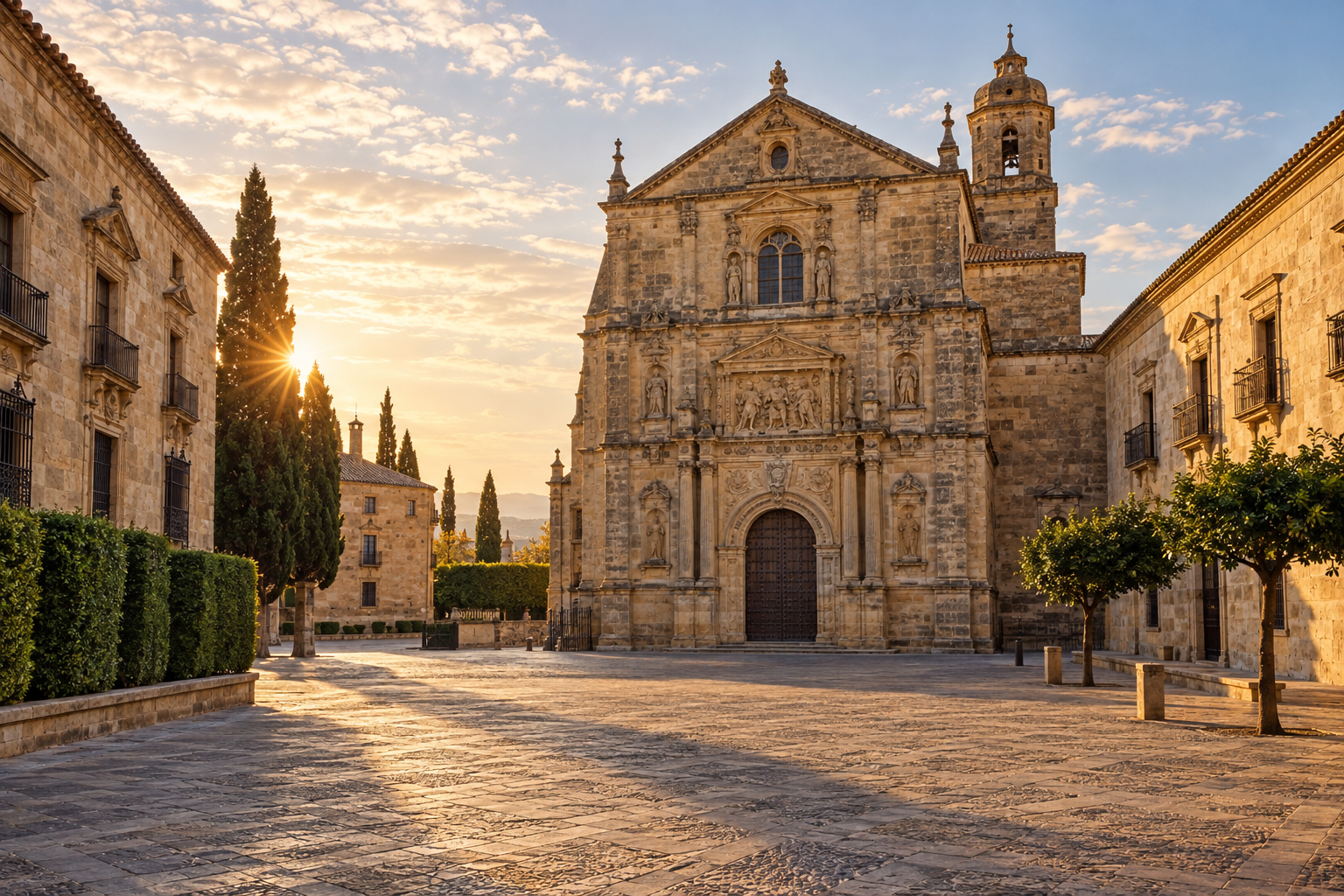
Higher up, the Church of Santa María la Mayor la Coronada gives the skyline much of its character. Its Gothic architecture adds another layer to the town’s history. Nearby, the castle area offers further evidence of the hill’s long defensive role, although access to specific remains should be checked locally.
Allow time simply to look outward. The countryside below is part of the historical setting, not merely a backdrop. Fields, ridges and routes across the landscape help you understand the relationship between the hilltop settlement and the territory around it.
A fluent and knowledgeable English-speaking driver can arrange a practical drop-off and collection point, reducing unnecessary backtracking while leaving you time to explore on foot. Some slopes and uneven surfaces remain part of the visit, regardless of how you arrive.
Planning a Thoughtful Private Visit
Medina Sidonia works well as a heritage-focused excursion from Cádiz or Jerez, or as a stop within a longer journey through western Andalusia. Allow several hours if you want to combine the Roman sites, the upper town and a relaxed pause in Plaza de España.
Begin by checking access to the archaeological attractions, then build your walking route around those arrangements. In warmer weather, tackle exposed uphill streets earlier when practical. Comfortable shoes are important, and underground spaces may not suit every visitor’s mobility needs.
Portugal Magik offers private transport in black Mercedes-Benz E-Class, V-Class and Sprinter vehicles. Your fluent and knowledgeable English-speaking driver handles the road logistics and shares history and context during the trip, while admission and access remain subject to each attraction’s arrangements.
The most satisfying approach is to give Medina Sidonia room to reveal its layers. Start with the Roman infrastructure, follow the surviving street, then climb into the later town. By the time you reach a viewpoint, the whitewashed hilltop will feel less like a single picturesque place and more like a settlement repeatedly rebuilt around an enduring location.
Let us take you there, privately
Your own Mercedes-Benz and fluent English-speaking driver, on your schedule.
Request a private quoteGood to know
What Roman remains can you see in Medina Sidonia?
The principal attractions include Roman drainage passages, archaeological remains associated with the museum and a surviving section of paved Roman street. Check current access arrangements before visiting.
What was Medina Sidonia called in Roman times?
The ancient settlement was associated with the name Asido and became known during the Roman period as Asido Caesarina.
How long should you allow for Medina Sidonia?
Allow several hours to explore the archaeological attractions and walk through the upper town. Your timing will depend on site access, your walking pace and how many later monuments you include.
Is Medina Sidonia suitable for visitors with limited mobility?
The town has steep streets and uneven surfaces, and underground archaeological spaces may present additional challenges. Confirm accessibility directly with the attractions and discuss suitable vehicle drop-off points before traveling.
Let us take you there, privately
Your own Mercedes-Benz and fluent English-speaking driver, on your schedule.
Request a private quoteSignature Journeys
Prefer a ready-made private itinerary?
See our signature journeys, starting from €2,950