A Coastal Day With Room to Enjoy It
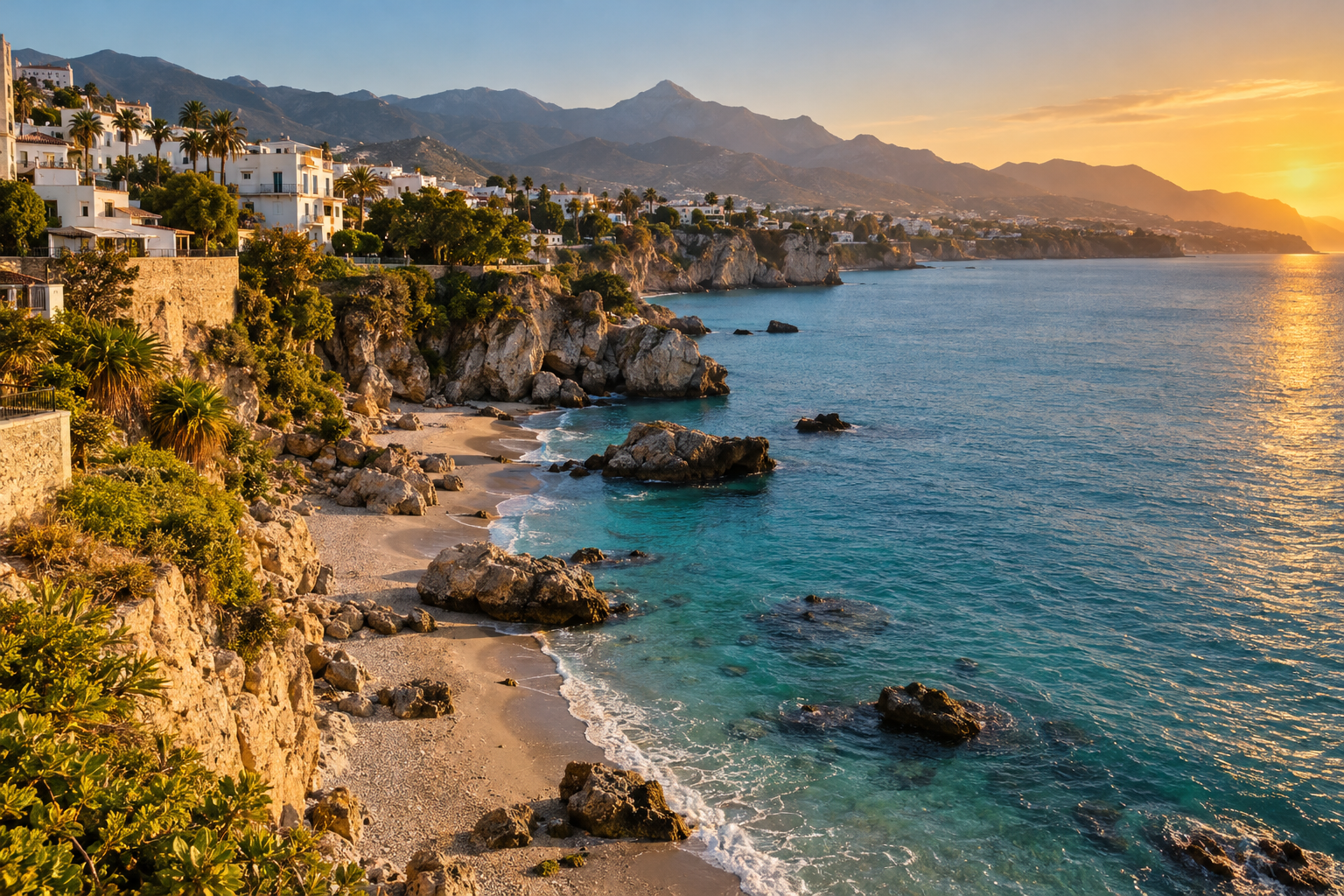
Nerja sits on the eastern Costa del Sol, where the mountains of the Axarquía approach the Mediterranean. Its appeal is not simply the sea. Within a relatively compact area, you can explore a remarkable cave system, walk through an old coastal town and look across coves framed by rocky headlands.
For a first visit, a satisfying sequence is to begin at the Nerja Cave, then continue into town for lunch, the Balcón de Europa and an afternoon on foot. This puts the most structured visit first and leaves the later hours open to your interests and energy.
From Málaga, Nerja makes a rewarding full-day outing. Road conditions and your departure point affect the journey, so resist building the day around a tight timetable. A private English-speaking driver, fluent and knowledgeable, makes the transition from the cave area to the town center easier by handling road navigation, parking logistics and suitable drop-off arrangements.
Bring comfortable shoes, sun protection and a light layer for the cave. Even when the coast feels warm, the underground setting can feel noticeably cooler.
Begin Beneath the Hills at the Nerja Cave
The Nerja Cave, or Cueva de Nerja, lies near Maro, just east of the town itself. Discovered in 1959, it is one of the area's defining attractions, with enormous chambers and limestone formations shaped by water over very long periods.
The scale is what stays with you. Stalactites descend from the ceiling, stalagmites rise from the ground and immense columns connect the two. As you move through the visitor route, the proportions change continually: a passage opens into a hall, and formations that first seem substantial become small beside the surrounding rock.
The cave also holds evidence of prehistoric human activity, including rock art. However, the archaeological importance of the wider cave should not be confused with what you will see on the standard visitor route. Sensitive areas and prehistoric paintings are not part of the usual public circuit.
Check current admission arrangements before traveling and book an appropriate entry time when required. The route involves steps and uneven or potentially slippery surfaces, so consider mobility needs carefully. This is not a visit to squeeze between two other fixed appointments.
Afterward, pause outside before moving on. The contrast between the enclosed chambers and the bright Mediterranean landscape is part of the experience. If underground walking does not suit you, give that time instead to Nerja's viewpoints and streets.
Notice Maro and the Eagle Aqueduct
The cave's location gives you a reason to look beyond central Nerja. Nearby Maro is a small settlement of whitewashed buildings, with agricultural land and a rugged stretch of coast close by. It offers a different sense of place from the busier streets around the Balcón de Europa.
If the morning allows, take a short walk through Maro rather than adding another substantial attraction. The pleasure here is in the village scale, simple façades and glimpses of the surrounding landscape. Keep it brief if you want a relaxed lunch and a proper afternoon in Nerja.
Another notable landmark in this area is the Acueducto del Águila, commonly called the Eagle Aqueduct. Despite its arches and monumental appearance, it is not Roman. It was built in the nineteenth century to carry water to a nearby sugar factory, a reminder of the coast's agricultural and industrial past.
Its stacked tiers make a striking sight across the ravine. Treat this as an optional photographic stop only where safe, permitted access is available, rather than stopping casually on the road. With a private English-speaking driver, fluent and knowledgeable, you can leave those practical decisions to someone familiar with the route while hearing historical context during the journey.
Let us take you there, privately
Your own Mercedes-Benz and fluent English-speaking driver, on your schedule.
Request a private quoteMake the Balcón de Europa Your Midday Centerpiece
Back in Nerja, walk toward the Balcón de Europa. This broad promenade projects toward the sea above the shoreline, opening out to views along the coast in both directions. It is the town's best-known landmark, but its setting deserves more than a quick photograph.
Look down toward Calahonda Beach, tucked beneath the eastern side, then turn toward the rocky shore and beaches to the west. The viewpoint helps you understand Nerja's geography: the old town meets the water at an elevated edge, while smaller beaches occupy the spaces below.
A statue of King Alfonso XII recalls his visit following the destructive earthquake of 1884. The popular story connecting him with the viewpoint's name is often repeated, but the panorama needs no legend to explain its appeal.
Nearby, the Church of El Salvador provides a quieter architectural counterpoint to the open sea. Its white exterior and bell tower form part of the town's familiar central scene. If the church is open to visitors, step inside respectfully, allowing for services and local worship.
This is a good point to stop for lunch. Choose somewhere whose menu and setting suit you, then take your time. You do not need a long meal, but a proper pause makes the afternoon much more enjoyable than continuous sightseeing.
Spend the Afternoon Between Old Streets and the Shore
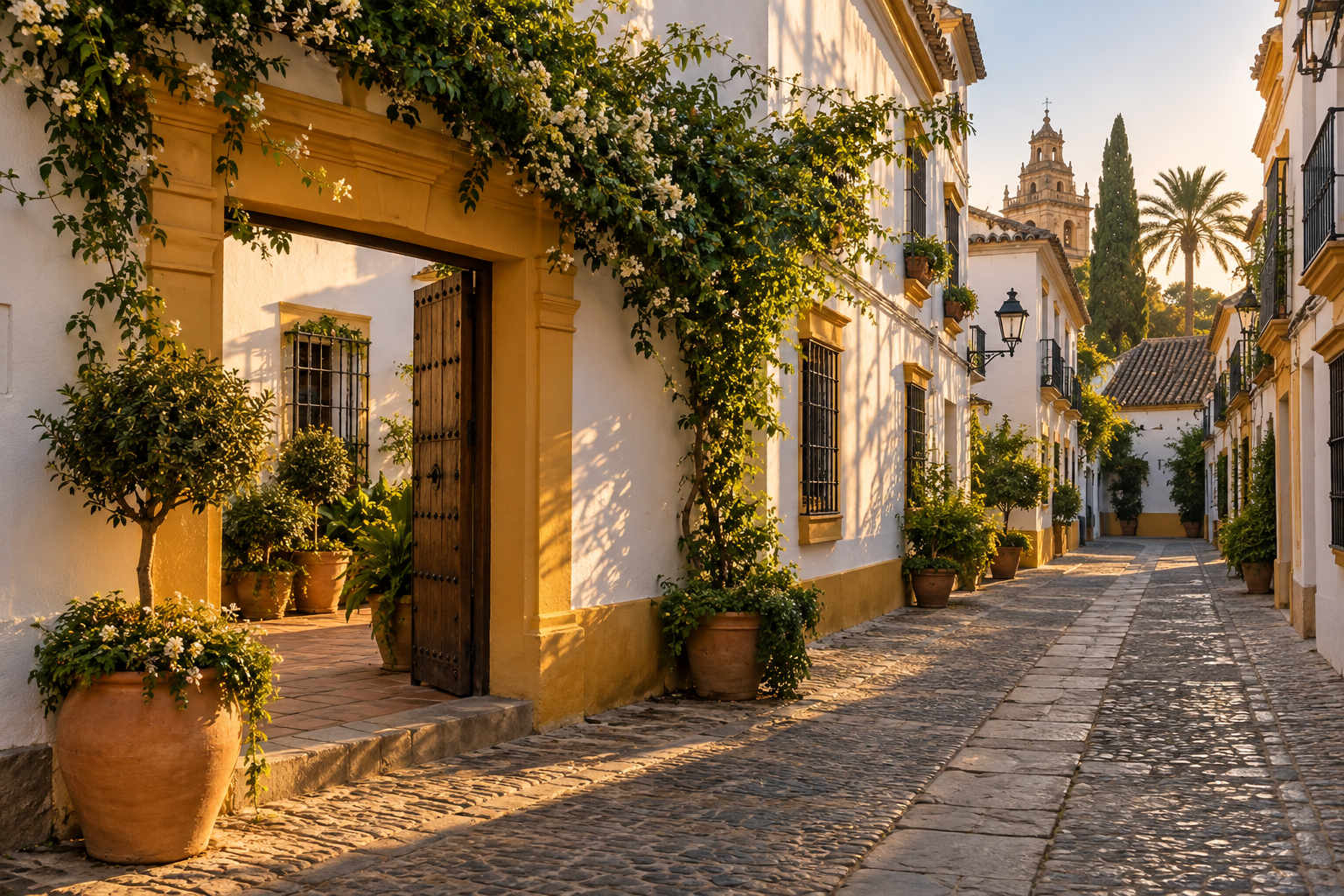
Nerja's central streets reward an unhurried walk. Around Calle Pintada and Calle Almirante Ferrándiz, whitewashed façades, balconies, shops and restaurant terraces create a lively townscape. These are working commercial streets rather than a preserved historical stage set, and that everyday character is part of their interest.
Move away from the busiest corners occasionally. A narrower street or a small square can offer a welcome change of pace, particularly when the central promenade is crowded.
For the rest of the afternoon, choose one direction rather than trying to see every beach:
- Calahonda: Best appreciated first from above, with access involving steps. It suits a closer look at the cove below the town's signature viewpoint.
- La Torrecilla: A convenient western option for a shoreline stroll and another perspective on Nerja's coastal setting.
- Burriana: A larger beach east of the center, with a broad sweep of shore and a substantial restaurant frontage. Allow for slopes on the walk and a climb on the return.
You need not swim to enjoy any of these places. Watching the water from the shore, noticing the changing light on the rocks or sitting for a coffee can be a fitting conclusion to the day's sightseeing.
Finish With Light, Not Another Checklist
Before leaving, return to the Balcón de Europa if time and energy allow. Later light can change the color of the sea and soften the buildings around the square. The scene feels different once you have walked the streets and seen the coves beneath it.
Keep the final part of your itinerary flexible. In summer, shade and rest may matter more than another walk. During shorter winter days, prioritize the coastal views while there is still daylight. Wind or rain can also make an indoor stop more appealing than lingering on an exposed viewpoint.
Portugal Magik can arrange your Nerja day with private transportation in a black Mercedes-Benz E-Class, V-Class or Sprinter, according to your party's needs. Your private English-speaking driver, fluent and knowledgeable, shares history and context during the trip and handles the driving logistics. Attraction admission remains subject to current availability and visiting arrangements.
The most memorable day in Nerja balances its major sights with breathing room: the vastness of the cave, the openness of the sea and time to enjoy the town between them.
Let us take you there, privately
Your own Mercedes-Benz and fluent English-speaking driver, on your schedule.
Request a private quoteGood to know
Is one day enough to visit Nerja?
A full day allows time for the Nerja Cave, the Balcón de Europa, lunch and a walk through the town or along part of the shore. Keep Maro and additional beach stops optional to avoid rushing.
Can you see prehistoric paintings during a Nerja Cave visit?
The prehistoric paintings and sensitive archaeological areas are not part of the usual public visitor circuit. The standard visit focuses on the cave's accessible chambers and geological formations.
Is Nerja suitable for visitors with limited mobility?
Parts of the central promenade may be easier to enjoy than the cave and beach approaches. The cave involves steps, while several beaches require stairs or sloping walks. Check current accessibility information and plan around your specific needs.
What should you bring for a day of sightseeing in Nerja?
Bring comfortable walking shoes, sun protection, water and a light layer for the cave. A small day bag is useful when combining an underground visit with time outdoors.
Let us take you there, privately
Your own Mercedes-Benz and fluent English-speaking driver, on your schedule.
Request a private quoteSignature Journeys
Prefer a ready-made private itinerary?
See our signature journeys, starting from €2,950