Begin With a Realistic Half-Day Plan
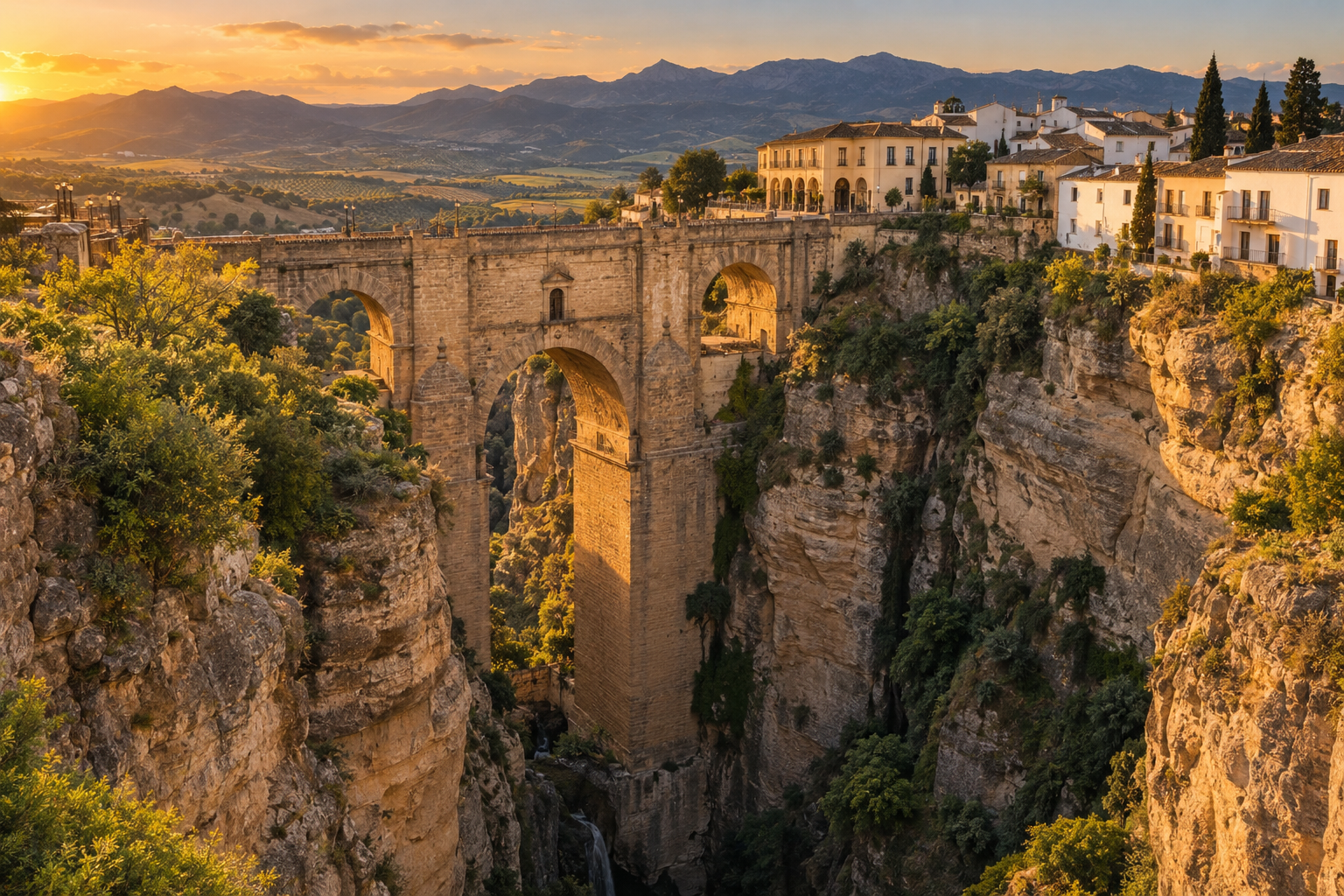
Ronda stands high above the surrounding countryside, divided by the deep El Tajo gorge carved by the Guadalevín River. Its setting is extraordinary, but the town offers more than a famous photograph: bridges, churches, palaces and public gardens reveal how people have lived around this dramatic landscape for centuries.
With half a day, concentrate on the central sights rather than trying to reach every viewpoint. Allow roughly four to five hours in Ronda itself, separate from your journey there. That gives you time for the principal gorge views, a walk through the historic quarter and one substantial interior visit, with a short refreshment stop.
A sensible sequence is:
- Alameda del Tajo and the nearby Plaza de Toros.
- Puente Nuevo and the upper gorge viewpoints.
- The historic quarter around Plaza Duquesa de Parcent.
- Either Palacio de Mondragón or the Arab Baths, depending on your interests and walking preferences.
A private English-speaking driver, fluent and knowledgeable, makes arrival easier by handling the approach, parking logistics and a practical collection point. You can focus on the town rather than spend part of your limited visit finding somewhere to leave a car.
Start With Alameda del Tajo and the Plaza de Toros
The Alameda del Tajo is an appealing place to begin. This public promenade brings you to the edge of Ronda’s plateau, where the landscape opens toward farmland and mountain ridges. Before you turn toward the famous bridge, pause here to appreciate the scale of the town’s elevated position.
The paths offer a comparatively gentle introduction to a destination where slopes and uneven paving can otherwise shape your day. Trees provide some welcome shelter, although the exposed viewpoints can feel hot in summer and brisk in cooler weather.
Nearby stands the Plaza de Toros, one of Spain’s best-known historic bullrings. Completed in the late eighteenth century, it is closely associated with Ronda’s place in the development of bullfighting. Its restrained exterior contrasts with the circular arena and two levels of arcaded seating inside.
Whether to enter depends on your interests. If architecture and the history of the bullring appeal to you, make this your principal interior stop. If not, appreciate the exterior and continue toward the gorge. On a half-day visit, selecting one major interior usually creates a better experience than purchasing admission to several places and hurrying through each.
Give Puente Nuevo Your Full Attention
Puente Nuevo is the essential Ronda sight. Completed in 1793, the monumental stone bridge spans El Tajo and connects the historic town with the newer district on the opposite side. Its tall masonry supports seem to rise directly from the gorge, making the structure inseparable from the landscape around it.
Approach slowly rather than treating the crossing as a quick photo stop. Look down into the ravine, then out toward the countryside beyond the town. The contrast between tightly clustered buildings, sheer rock and open land explains much of Ronda’s visual power.
The views from around Plaza de España and the upper gorge edges are rewarding without requiring a descent. Cross the bridge on the pedestrian pavement, allowing for traffic and other visitors, and look back from the historic-quarter side for a different sense of its proportions.
You do not need to reach the bottom of the gorge to appreciate the bridge. Lower viewpoints involve additional walking and changes in elevation, and access arrangements can change. For a short visit, the upper viewpoints are the most dependable priority.
Your private English-speaking driver, fluent and knowledgeable, can share the history and context during the journey to Ronda and help you plan around the return time. That leaves you free to linger at the bridge without losing track of the wider day.
Let us take you there, privately
Your own Mercedes-Benz and fluent English-speaking driver, on your schedule.
Request a private quoteContinue Into the Historic Quarter
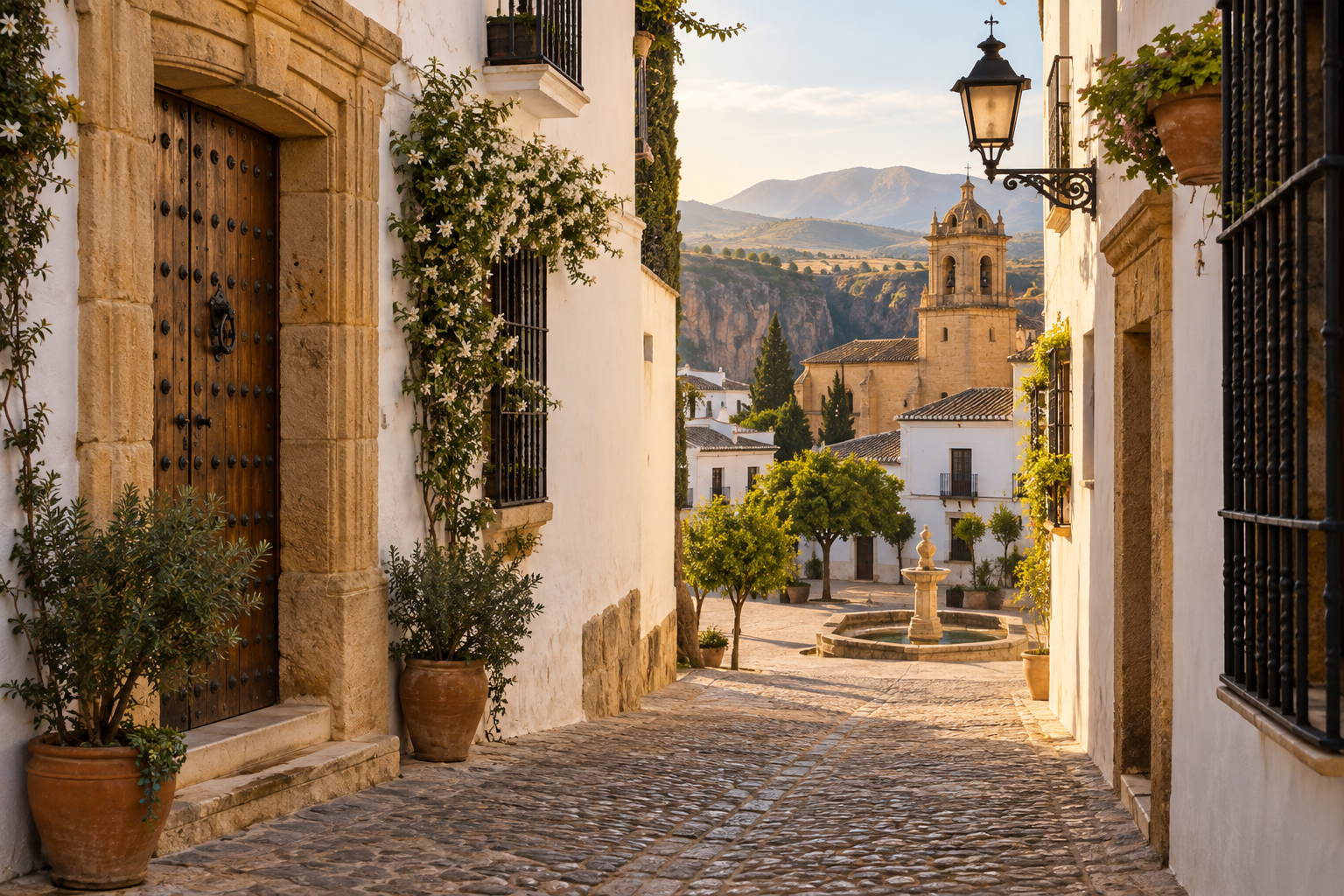
South of Puente Nuevo, the historic quarter invites a slower pace. Streets narrow, whitewashed walls frame occasional views, and substantial stone doorways hint at the importance of former residences. Walk toward Plaza Duquesa de Parcent rather than trying to cover every lane.
This square is one of the best places to understand Ronda beyond its scenery. Gardens and mature trees soften the space, while the surrounding buildings give it a distinctly civic and religious character. It is a natural place to pause after the busier bridge approaches.
The principal monument here is Santa María la Mayor. The church occupies the site of Ronda’s former main mosque, and its architecture reflects changes made after the Christian conquest of the town in 1485. Gothic and Renaissance elements are among the layers visible in the building.
If you decide to enter, check current visitor access and allow proper time rather than squeezing it between other admissions. Otherwise, the exterior and square still make a worthwhile stop.
Notice how the character of the town changes within a short distance. Around the bridge, the gorge dominates your attention. Here, the relationship between streets, homes, church and square takes over, giving your visit a more complete sense of Ronda as a living town.
Choose Between a Palace and the Arab Baths
For a first visit focused on architecture and views, Palacio de Mondragón is a strong choice. The historic palace houses Ronda’s municipal museum, while its courtyards and gardens provide a more intimate contrast to the scale of Puente Nuevo.
The building has been altered over time, so it is best appreciated as a layered residence rather than an unchanged survival from a single period. Its courtyards, decorative details and garden outlooks reward unhurried attention. It also fits naturally into a route through the upper historic quarter.
The Arab Baths offer a different emphasis. Situated lower down near the old approaches to the town, they are among Ronda’s most important surviving monuments from its Islamic period. Their vaulted chambers and star-shaped openings help explain the practical design and atmosphere of a medieval bathhouse.
Choose the baths if medieval engineering and Islamic-era Ronda particularly interest you. Remember that reaching them involves descending from the upper town, with a climb afterward unless your onward arrangements allow otherwise.
For most half-day visitors, the decision is straightforward: choose Mondragón for courtyards, museum displays and a convenient upper-town route; choose the baths for a more focused encounter with medieval architecture. Check current opening arrangements before committing your limited time.
Finish Without Rushing the Return
Reserve the final part of your visit for a brief café stop or another look across the gorge. Ronda is especially rewarding when you leave a little space between monuments, rather than filling every minute with an admission or a walk to another viewpoint.
Wear shoes with good grip for stone paving, and carry water in warm weather. If steep walking is uncomfortable, keep your route centered on the Alameda, Puente Nuevo and the upper historic quarter, accepting that even this area includes uneven surfaces.
Portugal Magik can arrange your private journey in a black Mercedes-Benz E-Class, V-Class or Sprinter, according to your party and travel arrangements. A private English-speaking driver, fluent and knowledgeable, handles the transport logistics and shares regional context during the trip, with the collection plan shaped around your chosen route.
For half a day, the strongest combination is simple: expansive countryside views, Puente Nuevo, the historic quarter and one interior that genuinely interests you. That is enough to leave with an understanding of Ronda, not just a photograph of its bridge.
Let us take you there, privately
Your own Mercedes-Benz and fluent English-speaking driver, on your schedule.
Request a private quoteGood to know
Is half a day enough to visit Ronda?
Four to five hours in Ronda allows time for Puente Nuevo, upper gorge viewpoints, the historic quarter and one main interior visit. Travel time to and from Ronda should be planned separately.
What should you prioritize on a first visit to Ronda?
Start with Alameda del Tajo, see Puente Nuevo from the upper viewpoints, and continue into the historic quarter around Plaza Duquesa de Parcent. Add Palacio de Mondragón, the Arab Baths or the bullring according to your interests.
Do you need to walk down into the gorge?
No. The bridge and upper gorge viewpoints are rewarding without a descent. Lower routes require extra time and physical effort, and current access arrangements should be checked.
Is Ronda suitable if you prefer less strenuous walking?
A route focused on the Alameda, bridge and upper historic quarter avoids the longer descent to the Arab Baths. Uneven paving and some slopes remain, so the itinerary should reflect your comfort level.
Let us take you there, privately
Your own Mercedes-Benz and fluent English-speaking driver, on your schedule.
Request a private quoteSignature Journeys
Prefer a ready-made private itinerary?
See our signature journeys, starting from €2,950