A Village Built Beneath the Rock
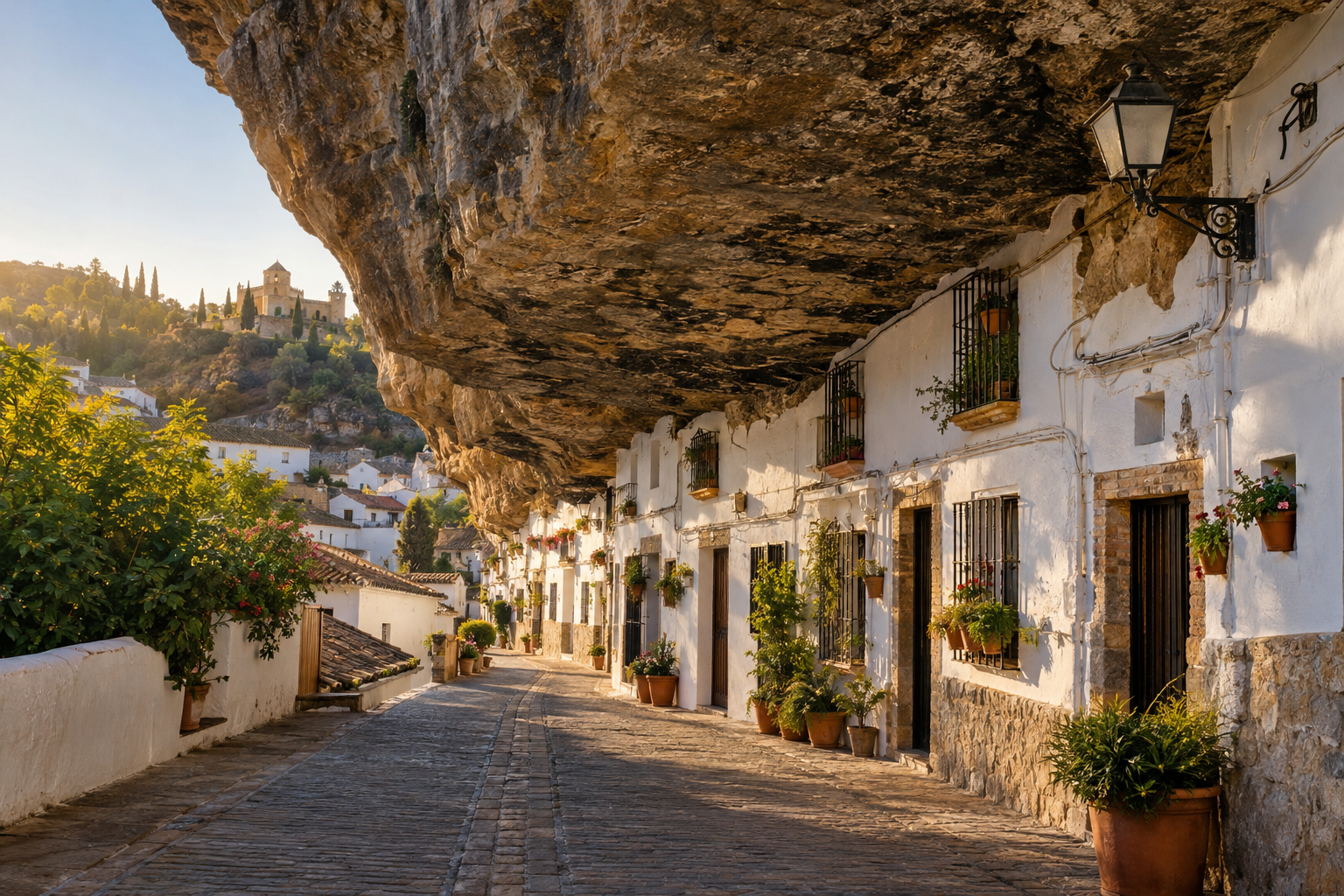
Your first glimpse of Setenil de las Bodegas may leave you wondering where the cliffs end and the houses begin. Whitewashed facades sit beneath enormous shelves of stone, with balconies, doorways and narrow streets fitted into the contours of a river gorge. The rock is not simply a backdrop. It is part of the architecture.
Setenil lies in the province of Cádiz, in inland Andalusia, within reach of Ronda. Its distinctive layout follows the valley of the Río Trejo, where erosion has shaped the cliffs that shelter many of its buildings. Rather than being entirely excavated caves, many of these homes were created by enclosing spaces beneath natural overhangs.
Half a day gives you time to appreciate both sides of the village: the famous rock-covered streets below and the older fortified heights above. Allow roughly three to four hours on foot, including pauses for photographs and refreshments. You can shorten the uphill portion if you prefer an easier visit.
A private driver makes the arrival simpler by coordinating a suitable drop-off and collection point around local access restrictions. That matters here, where the village's narrow streets were not designed for modern traffic.
Start with Calle Cuevas del Sol
Begin your walk around Calle Cuevas del Sol, one of Setenil's most recognizable streets. Here, a huge limestone overhang projects above whitewashed buildings, making the roofs appear almost incidental beneath the weight of the cliff.
The street takes its name from its sunnier orientation, although the light changes with the season and time of day. Look closely at the contrast between the pale facades and the rough stone above them. Window frames, tiled details and modest entrances give a domestic scale to geology that can otherwise feel overwhelming.
This is a good place to slow down rather than rush from one photograph to the next. The most revealing views are often at an angle, where you can see how far the rock extends over the buildings. Stand back when space allows, but keep doorways and the walking route clear.
Cafés and restaurants occupy some of these sheltered spaces. A brief coffee stop offers a chance to experience the setting from beneath the overhang rather than only looking at it from outside. If you are visiting on a weekend or during a holiday period, expect the best-known stretch to feel lively.
The river corridor also helps explain the village's shape. Streets, bridges and buildings respond to the confined valley, creating a place best understood through a succession of short walks rather than a single grand viewpoint.
Cross to Calle Cuevas de la Sombra
Nearby, Calle Cuevas de la Sombra provides a different impression. Along its most striking section, the rock stretches across the lane overhead, creating a passage that feels closer to a natural tunnel than a conventional street.
The transition from sunlight to shade is part of the experience. Allow your eyes a moment to adjust, then notice how the uneven ceiling contrasts with the clean lines of the white walls below. This is one of the clearest places to understand how Setenil's residents adapted existing geological features to everyday life.
Although Cuevas del Sol and Cuevas de la Sombra are close together, they deserve separate attention. One emphasizes the dramatic frontage of buildings beneath the cliff. The other places you directly under the stone.
For this lower part of the village, keep a few practical points in mind:
- Wear shoes with dependable grip on uneven paving.
- Bring a light layer in cooler months, when shaded passages can feel chilly.
- Step aside for residents, deliveries and other pedestrians.
- Avoid treating residential doors and windows as staged photo settings.
Explore a little beyond the busiest corners, following the connected lanes and river crossings where access is public. You do not need a complicated route to find changing perspectives on the same remarkable relationship between rock and architecture.
Let us take you there, privately
Your own Mercedes-Benz and fluent English-speaking driver, on your schedule.
Request a private quoteClimb to the Castle and Church
After the lower streets, head uphill toward the historic center. The climb introduces a more familiar Andalusian village scene: white walls, winding lanes and glimpses of rooftops descending into the valley. It also gives the rock-covered streets their wider historical context.
Setenil was a fortified settlement during the period of Muslim rule. Its position made it strategically important, and it fell to the forces of the Catholic Monarchs in 1484, during the campaigns that preceded the conquest of Granada.
The surviving castle keep, known as the Torre del Homenaje, is the principal reminder of that defensive past. Even if you only view it from outside, its elevated position helps you understand the practical advantages of the site. Interior access depends on current arrangements, so treat a visit inside as an optional addition rather than the foundation of your itinerary.
Nearby stands the Church of Nuestra Señora de la Encarnación, built after the Christian conquest. Its late Gothic character offers a different architectural language from the domestic buildings tucked beneath the cliffs below. If it is open to visitors, enter respectfully and take a quiet look inside.
The upper area rewards the effort with views across the clustered houses and surrounding countryside. There is no need to chase every possible lookout. Choose a comfortable place to pause and trace the route of the village through the landscape.
Your private driver can help you judge how much uphill walking fits your pace and the day's conditions, particularly if you would rather concentrate on the lower streets.
Keep Your Half-Day Route Unhurried
For a balanced visit, give the lower village the largest share of your time, then continue uphill before returning for a final pause. Think of the following as a flexible sequence, not a timetable:
- First hour: Walk along Cuevas del Sol and the nearby river crossings.
- Next 45 minutes: Explore Cuevas de la Sombra and adjoining public lanes.
- Following hour: Climb toward the castle keep and church, allowing time for views.
- Remaining time: Enjoy refreshments or a relaxed lunch before departure.
Photography stops and busy streets can easily stretch those estimates. If you want a longer meal, leave extra room rather than squeezing the upper village into a hurried climb.
Morning is often a pleasant choice for walking, especially in warmer weather, but no arrival time guarantees empty streets. The overhangs create shade, not a uniformly cool village. Exposed uphill lanes can still feel hot, so carry water and use sun protection.
Make Setenil Part of Your Andalusia Journey
Setenil works particularly well alongside Ronda, whose dramatic gorge and monumental architecture offer a contrasting view of inland Andalusia. Visiting both in one day is possible, but your starting point and appetite for walking should determine the pace. From farther away, travel time becomes a significant part of the day.
With Portugal Magik, an English-speaking private driver handles the road journey and coordinates the day's logistics, allowing you to focus on the places themselves. Private transport in a black Mercedes-Benz E-Class, V-Class or Sprinter can be arranged around your party and itinerary, with the village explored on foot from an appropriate access point.
The most rewarding half day in Setenil is not the one with the longest checklist. It is the one that gives you time to stand beneath the rock, climb above the rooftops and understand how a remarkable landscape became a living village.
Let us take you there, privately
Your own Mercedes-Benz and fluent English-speaking driver, on your schedule.
Request a private quoteGood to know
Is half a day enough to visit Setenil de las Bodegas?
Yes. Around three to four hours allows you to explore the main rock-covered streets, climb toward the castle and church, and pause for refreshments. Allow longer if you want a leisurely lunch.
What are the main streets to see in Setenil?
Calle Cuevas del Sol and Calle Cuevas de la Sombra are the essential starting points. Both show how buildings were fitted beneath natural rock overhangs, with a particularly striking covered passage on Cuevas de la Sombra.
Does visiting Setenil involve much uphill walking?
The route to the castle keep and church involves uphill walking on village lanes. You can focus on the lower rock-covered streets for a less strenuous visit, although uneven paving still requires care.
Can you visit Setenil and Ronda on the same day?
Yes, they can be combined in a day itinerary. The amount of time available in each depends on your departure point, walking pace and meal stops.
Let us take you there, privately
Your own Mercedes-Benz and fluent English-speaking driver, on your schedule.
Request a private quoteSignature Journeys
Prefer a ready-made private itinerary?
See our signature journeys, starting from €2,950