Before the Cathedral Skyline
If you are drawn to Andalusia for its cathedrals, palaces and fortresses, Itálica offers a compelling place to begin. Here, near the modern town of Santiponce northwest of Seville, the monumental landscape belongs to an earlier world: Roman streets, elaborate houses, public baths and an immense amphitheater.
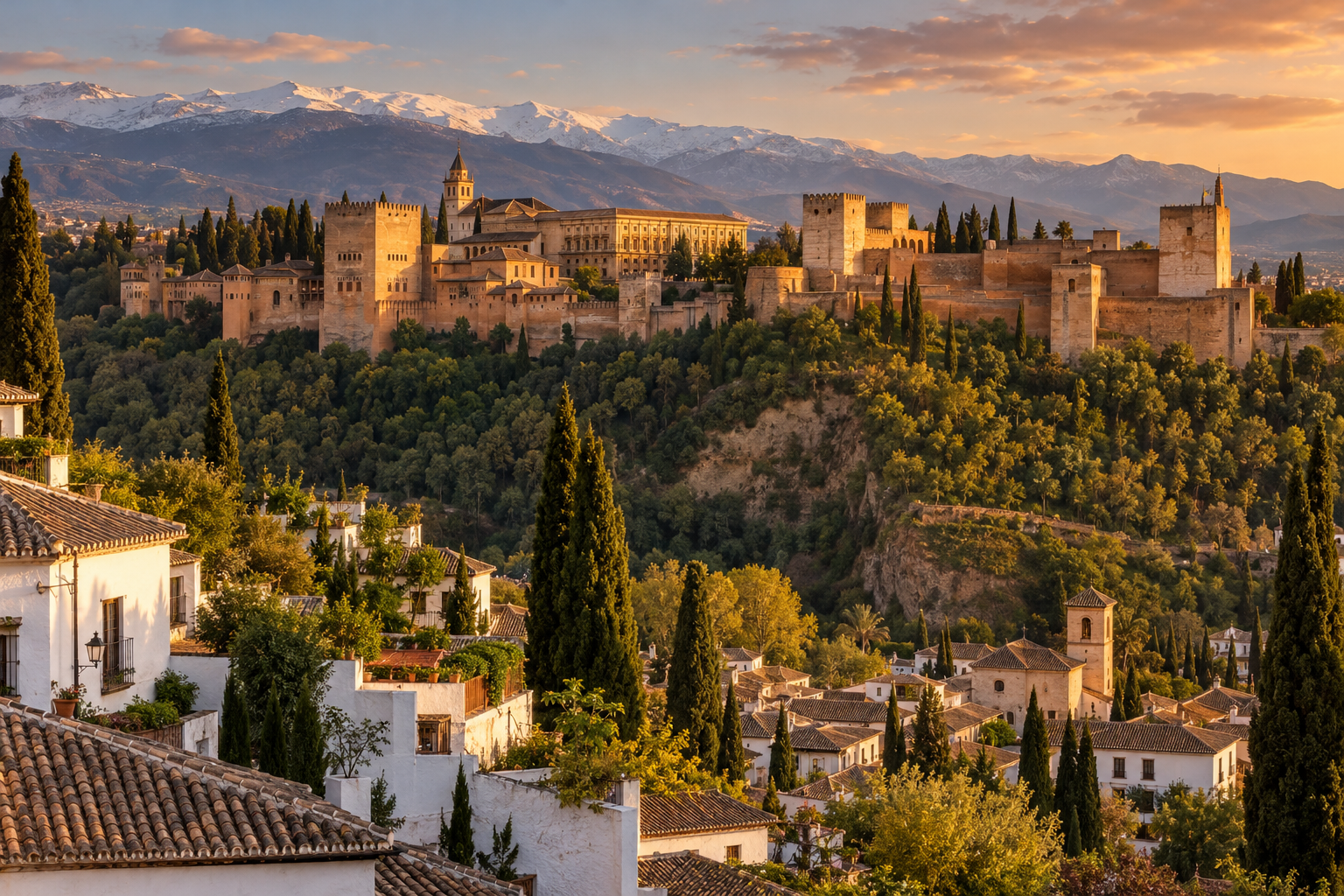
You will not find a surviving Roman palace or a medieval fortress within the archaeological site. Its appeal is different. Itálica reveals how public architecture, domestic luxury and urban planning expressed authority centuries before the buildings that now define Seville’s skyline.
That distinction makes a visit especially rewarding. Rather than treating every period as a variation on the same story, you can recognize how different societies built for worship, government, spectacle and everyday life. Itálica adds depth to a journey through southern Spain’s more familiar monuments, while offering an unusually open, outdoor encounter with the ancient past.
A Roman City With Imperial Connections
Itálica traces its foundation to 206 BC, when the Roman commander Publius Cornelius Scipio established a settlement following his campaign against Carthaginian forces in the Iberian Peninsula. Its origins belong to the Second Punic War, long before the Roman Empire reached its greatest extent.
The city later acquired exceptional prestige through its imperial connections. Trajan was born here, while Hadrian came from a family rooted in Itálica. Hadrian’s own birthplace is debated, so the distinction matters: the city’s relationship with him is secure even where the details of his birth are not.
Under Hadrian in the second century AD, Itálica expanded with an ambitious new urban district. Much of what you explore in the main archaeological enclosure belongs to this enlargement, often called the nova urbs. The older settlement lies substantially beneath modern Santiponce.
This helps explain the character of your visit. You are not walking through a complete Roman city preserved in a single moment. Instead, you encounter a particularly monumental portion of a settlement whose history continued well beyond its imperial prominence.
A private English-speaking driver (fluent and knowledgeable) can share this historical context during the journey from Seville, helping you arrive with a clear understanding of what the exposed remains represent.
The Amphitheater: Architecture Built for Spectacle
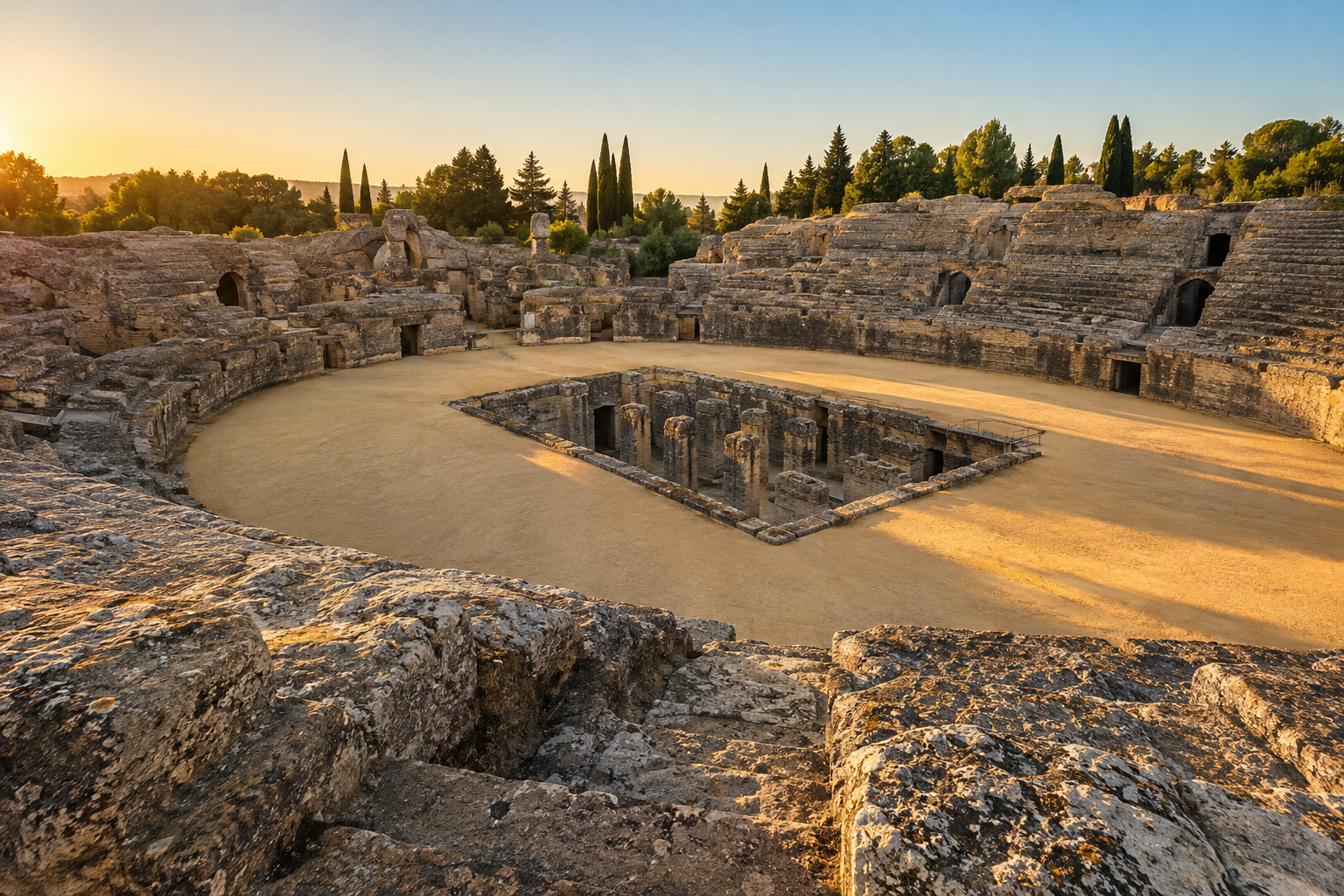
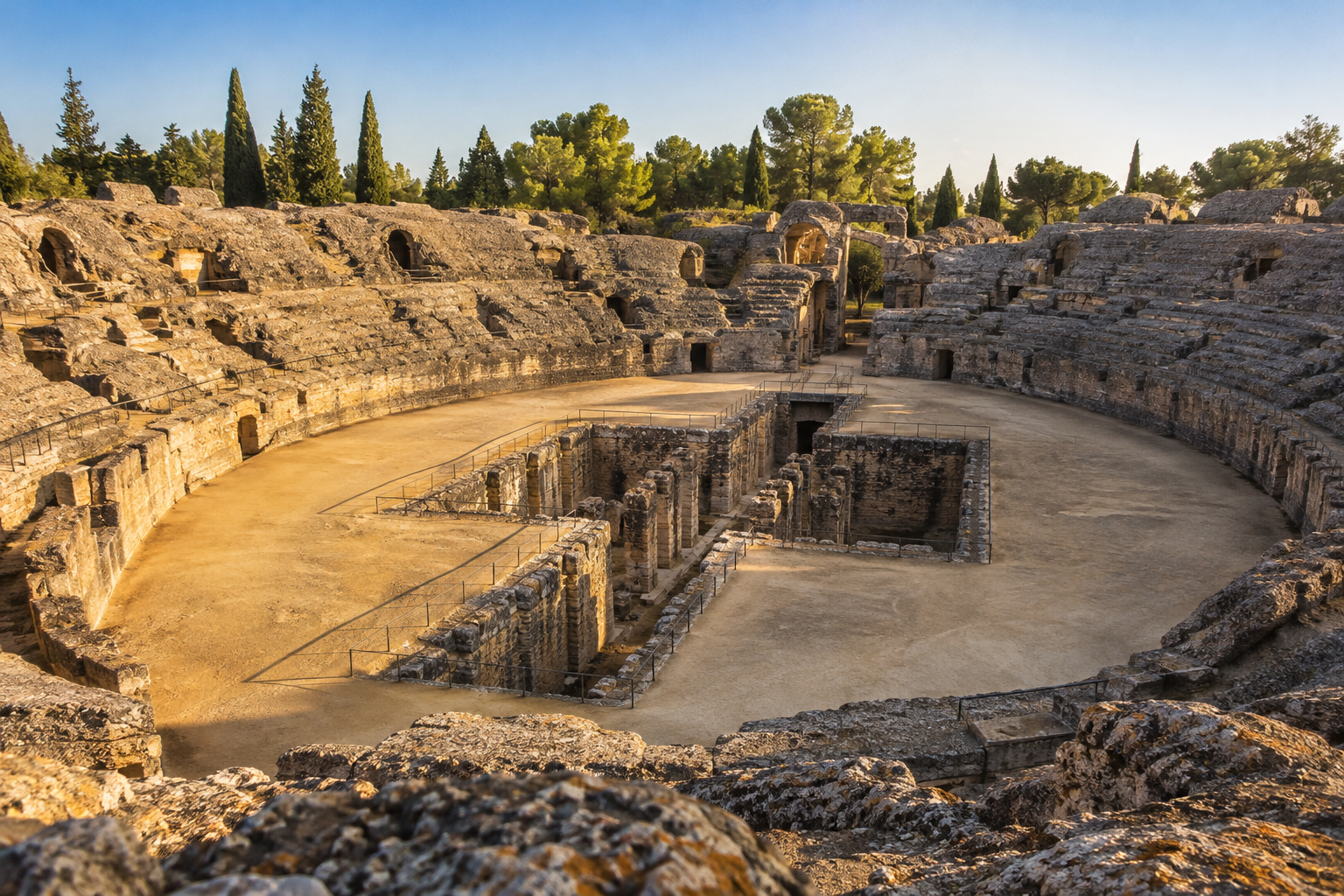
The amphitheater is Itálica’s most immediately arresting monument. Its scale gives physical form to the city’s standing in the Roman world, and its surviving structure makes the relationship between architecture and public spectacle unusually easy to appreciate.
Look first at the broad oval of the arena and the rising arrangement of the seating areas. Roman amphitheaters organized spectators as carefully as they framed the action below. Position within the building reflected distinctions in status, turning a public gathering into a visible expression of social order.
The exposed central pit is another important feature. It formed part of the arena’s service infrastructure and would originally have been covered by the performance surface. Today, its visibility helps you understand that the building was a working complex, not simply a monumental shell.
Although the heavy masonry may initially suggest a fortress, the amphitheater was not a defensive structure. It was built for spectacles, including gladiatorial combat. Keeping that purpose in mind makes the comparison with Andalusia’s later castles more interesting: both could project power, but they served very different practical roles.
Walk slowly where access permits, and pause to consider the contrast between enclosed passages and the open arena. Routes through archaeological monuments can change for conservation or safety reasons, so let the accessible areas shape your exploration rather than expecting every passage to be open.
Let us take you there, privately
Your own Mercedes-Benz and fluent English-speaking driver, on your schedule.
Request a private quoteMosaics and Houses: Luxury Without a Royal Palace
Beyond the amphitheater, Itálica becomes quieter and more intimate. Broad streets establish the outline of the planned district, while the remains of substantial houses reveal how prosperous residents arranged their domestic surroundings.
These were not royal palaces. They were elite residences, and their decoration offers a different perspective on luxury: prestige expressed through reception spaces, courtyard arrangements and carefully chosen floor mosaics.
The House of the Birds is particularly memorable for its mosaic panels depicting birds. At the House of the Planetarium, a mosaic represents divinities associated with the seven days of the week. Such names identify notable features of the excavated buildings, rather than preserving the names their Roman occupants used.
As you explore, look for three things:
- The relationship between the street and the house entrance, which helps distinguish public space from domestic space.
- The placement of mosaics within rooms, rather than viewing each floor only as an isolated artwork.
- The surviving outlines of courtyards and surrounding spaces, which suggest how light and movement shaped the home.
There is a useful comparison here with Seville’s later palatial architecture. Courtyards, ornament and controlled approaches all reward attention in both settings. However, the comparison should remain architectural rather than imply that Roman houses and medieval palaces had identical meanings or a simple, uninterrupted line of development.
From Itálica to Seville’s Cathedral and Alcázar
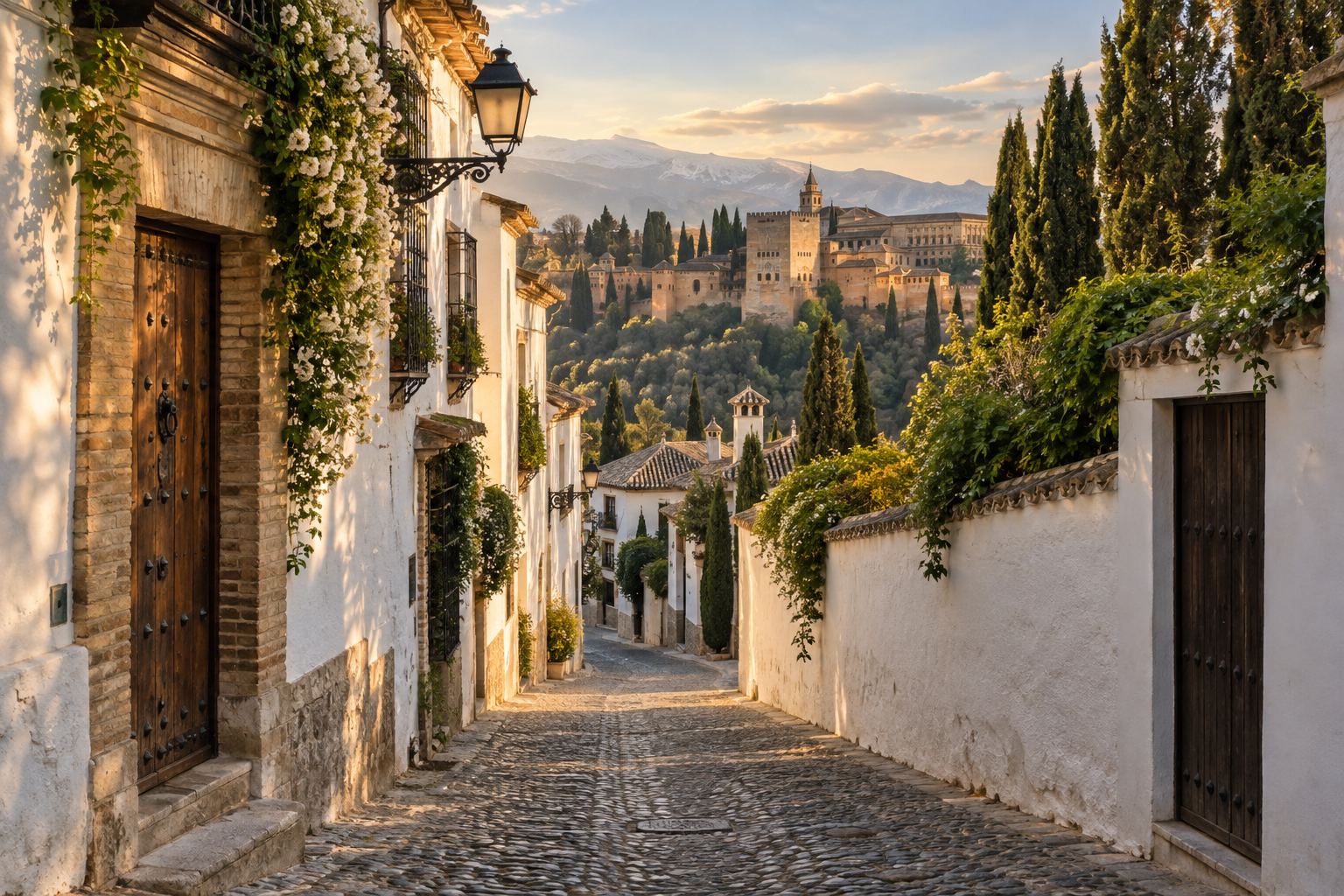
After Itálica, Seville’s great monuments can feel more distinct, not less. You have seen a Roman city organized around streets, residences and public institutions. In Seville, different religious and political traditions produced a cathedral and royal palace complex with their own histories.
Seville Cathedral occupies the site of the city’s former principal Almohad mosque. The Giralda preserves the mosque’s minaret beneath its later Christian additions, while the cathedral itself is celebrated for its vast Gothic interior. Its monumental scale serves a religious purpose very different from the public spectacle of Itálica’s amphitheater.
The Real Alcázar offers another expression of authority. Developed across successive periods, it includes the palace built for Pedro I in the fourteenth century, renowned for its Mudéjar architecture. Rooms, courtyards and gardens create a royal environment quite unlike the exposed foundations of Roman domestic buildings.
For a closer medieval counterpart to Itálica, consider the Monastery of San Isidoro del Campo in Santiponce. Founded in 1301, its substantial brick architecture brings a distinctly different religious landscape into the same local excursion. Its fortified appearance should not obscure its identity as a monastery.
Combining every monument in one day would leave little room for reflection. A private English-speaking driver (fluent and knowledgeable) makes it easier to coordinate the journey between Santiponce and Seville, while you reserve enough time for the places that interest you most. Monument admission and current visitor arrangements should be considered separately from transport.
Planning a Thoughtful Visit
Itálica is an outdoor archaeological visit, with exposed stretches and uneven surfaces. Comfortable shoes, water and sun protection matter more here than formal sightseeing attire. During warmer weather, an earlier visit can make walking more comfortable, subject to the site’s current opening arrangements.
Allow time to look beyond the headline monument. The amphitheater provides the dramatic first impression, but the streets and mosaics explain what kind of city stood around it. Check current information before traveling, since conservation work may affect which houses or areas you can enter.
With Portugal Magik, your private English-speaking driver (fluent and knowledgeable) handles the driving and transport logistics in a black Mercedes-Benz E-Class, V-Class or Sprinter, according to your party and arrangements. You can include Itálica in a private day tour from Seville or within a longer private journey through Andalusia.
The strongest reason to visit is not that Itálica resembles the region’s cathedrals, palaces or fortresses. It is that it lets you see beyond them. Among its Roman streets and surviving mosaics, Andalusia’s monumental history gains an earlier, unmistakably different chapter.
Let us take you there, privately
Your own Mercedes-Benz and fluent English-speaking driver, on your schedule.
Request a private quoteGood to know
Does Itálica have a cathedral, palace or fortress?
The main archaeological site is known for its Roman amphitheater, streets, baths and elite houses, not a surviving cathedral, royal palace or medieval fortress. It provides an earlier historical perspective on Andalusia’s monumental architecture.
Can you combine Itálica with Seville’s major monuments?
Yes, but it is best to prioritize rather than rush. Itálica can complement time at Seville Cathedral or the Real Alcázar, with monument admission and current visitor arrangements planned separately from private transport.
What should you wear when visiting Itálica?
Choose comfortable walking shoes suitable for uneven surfaces. Bring water and sun protection, and dress for an outdoor visit with exposed areas.
Which medieval monument is near Itálica?
The Monastery of San Isidoro del Campo is in Santiponce. Founded in 1301, it offers a valuable contrast with the nearby Roman remains. Check current visitor arrangements before including it in your day.
Let us take you there, privately
Your own Mercedes-Benz and fluent English-speaking driver, on your schedule.
Request a private quoteSignature Journeys
Prefer a ready-made private itinerary?
See our signature journeys, starting from €2,950