Before Cádiz, There Was Gades
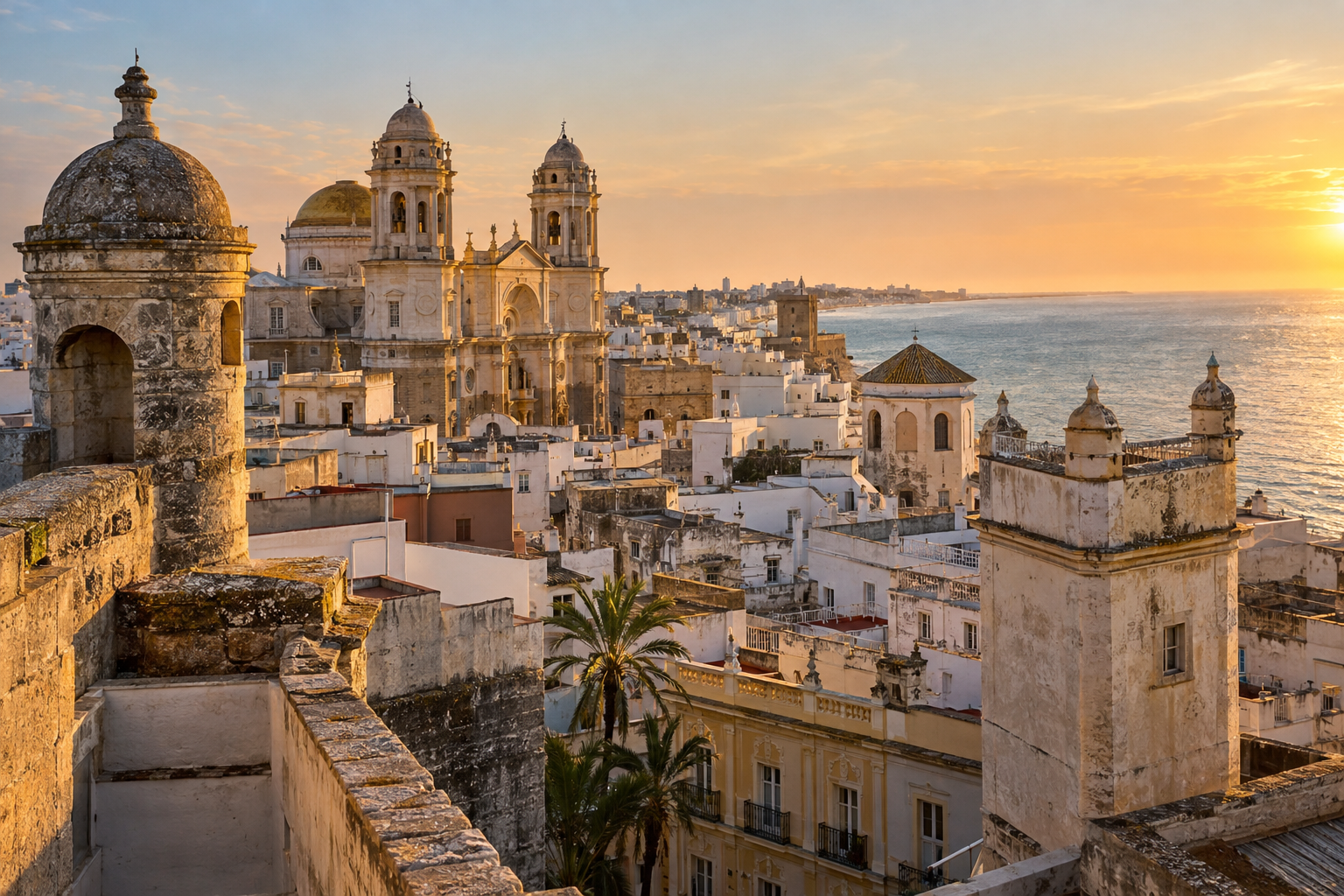
Cádiz invites you to look outward, toward the Atlantic, but its Roman story asks you to look beneath your feet. Below the whitewashed houses and narrow streets are traces of Gades, a prosperous port whose commercial connections linked southern Iberia with the wider Roman world.
The Romans did not establish the first settlement here. Phoenician settlers had founded Gadir centuries earlier, and the city subsequently belonged to the Carthaginian sphere. In 206 BC, during the Second Punic War, it entered the Roman orbit. Its maritime knowledge and established trading relationships helped it flourish under Roman rule.
Ancient Cádiz also had a different geography. Islands, channels and shorelines shaped a landscape that later development and natural change have substantially altered. The streets you walk today cannot simply be laid over a Roman map.
That is part of the appeal. Rather than finding one extensive archaeological park, you piece together Gades through a theater beneath a neighborhood, industrial remains below street level and objects recovered from the surrounding city.
The Roman Theater: Gades at Its Most Tangible
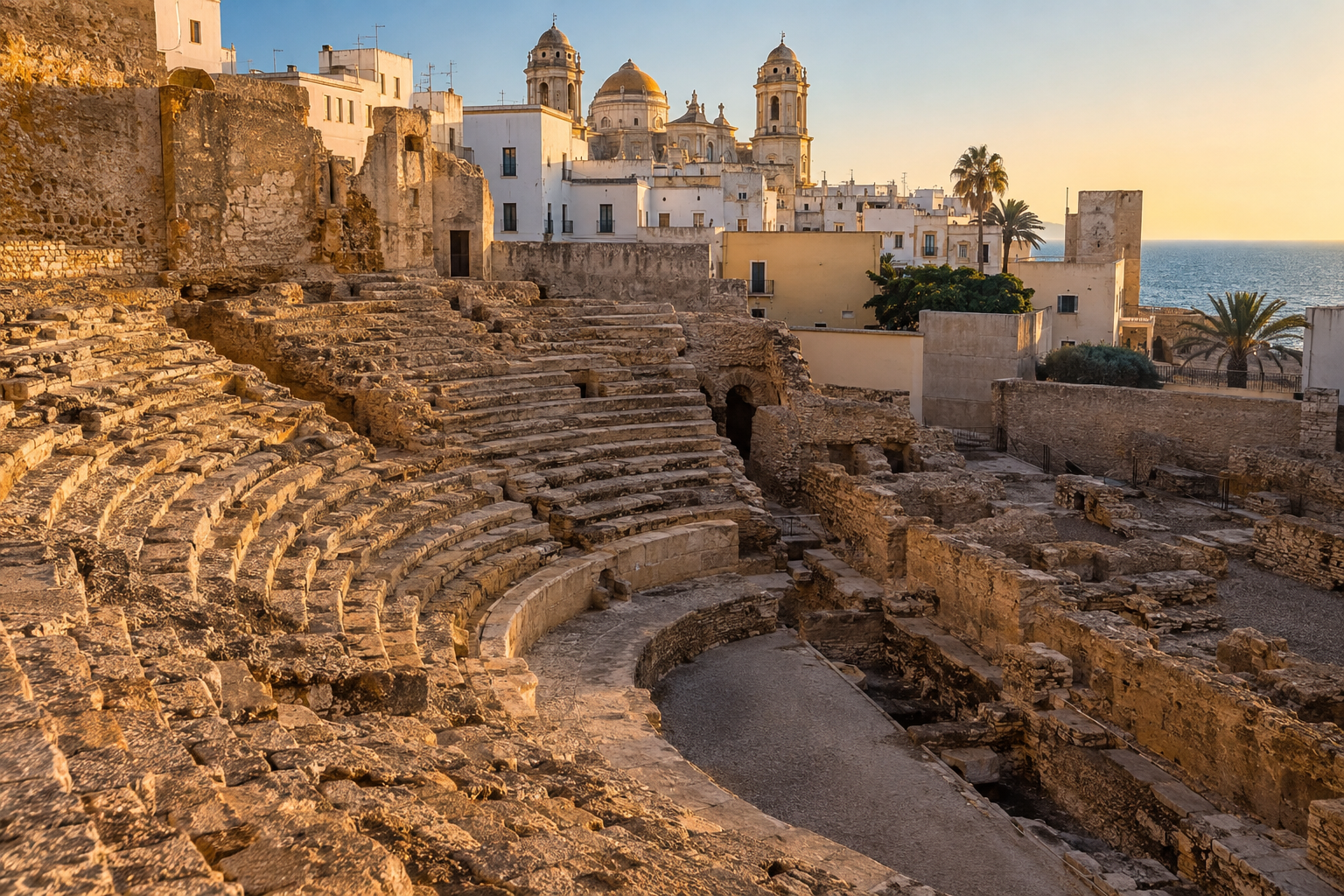
The Roman theater is the essential starting point. Partly concealed beneath the El Pópulo neighborhood, it brings the scale of ancient Gades into focus more clearly than any other surviving monument in the city.
Built in the first century BC, the theater is associated with Lucius Cornelius Balbus the Younger, a member of the influential Gaditan family whose ambitions reached Rome itself. Its presence speaks of more than entertainment. A substantial theater expressed urban confidence, public generosity and a connection with Roman civic culture.
Rediscovered in 1980, the monument remains only partly exposed. Later buildings occupy portions of the ancient site, so you should not expect a complete freestanding theater with an intact stage facade. Instead, the experience is one of encountering a monumental structure embedded in a living city.
Look closely at the surviving curve of the seating and the vaulted passage beneath it. These features reveal how spectators moved through the building and how architecture organized a large public gathering. The associated interpretation spaces help explain the relationship between the excavated remains and the original structure.
Give this stop enough time to become more than a photograph. Consider the engineering, the effort of construction and the audiences who once gathered here. Check current access arrangements before your visit, since archaeological sites can be affected by conservation work and operational changes.
Fish, Salt and the Wealth of a Roman Port
The theater shows how Gades displayed its prosperity. The remains of fish processing help explain one of the industries behind it.
The Atlantic waters around Cádiz supported a long tradition of fishing and preservation. Under Roman rule, salted fish and fish sauces were important products in southern Iberia’s commercial economy. Transported in ceramic amphorae, they could travel well beyond the coast where they were made.
At the archaeological site on Calle Sacramento, remains of a Roman fish-salting factory bring this industry into the modern city. Processing vats are a useful counterpoint to the theater’s public architecture: here, you are looking at the practical infrastructure of production rather than civic display.
Fish sauces, including those described as garum, belonged to a broader family of products rather than one uniform recipe. Ingredients and quality varied. It is more accurate to imagine a diversified trade than a single famous condiment sustaining the entire city.
When access is available, these remains reward a short, attentive visit. Confirm current visitor arrangements rather than assuming the site will be open when you pass. Even if you cannot enter, understanding this industry changes how you see Cádiz: the sea was not simply scenery, but a workplace and a commercial route.
Let us take you there, privately
Your own Mercedes-Benz and fluent English-speaking driver, on your schedule.
Request a private quoteArchaeological Collections and the People Behind the Ruins
Architecture gives Roman Cádiz its scale, while archaeological objects bring its inhabitants closer. The Museum of Cádiz, on Plaza de Mina, is an important place to investigate the ancient history of the city and its province, subject to current gallery access.
Its celebrated Phoenician sarcophagi belong to the story before Roman Gades. They are valuable here precisely because they prevent the Roman period from appearing in isolation. Cádiz already possessed deep Mediterranean connections when Roman power arrived.
For the Roman chapter, look for the objects and interpretation available from that period. Everyday ceramics, sculpture, inscriptions and funerary material can illuminate aspects of life that a theater alone cannot explain. Displays may change, so verify which archaeological rooms are accessible before making the museum central to your day.
Three questions can help you look more closely:
- What does an object reveal about trade or the movement of materials?
- Does it belong to public life, domestic life or burial customs?
- How does it suggest continuity with earlier traditions, or participation in Roman culture?
You do not need specialist knowledge to enjoy this approach. A storage vessel or fragment of lettering can make the ancient city feel more immediate than a broad chronology ever could.
Reading the Ancient City Between the Monuments
Between archaeological stops, allow time for the setting. El Pópulo’s compact lanes make the theater’s survival especially striking: a major Roman building exists within a neighborhood shaped by many later centuries.
The medieval arches, cathedral and surrounding houses are not Roman monuments. Their value to this itinerary lies in showing how successive cities occupied and transformed the same constrained ground. Cádiz is particularly rewarding when you distinguish those layers rather than treating everything old as part of one period.
Continue toward Campo del Sur for a wider view of the Atlantic frontage. The present seawalls and waterfront belong to later chapters, but the proximity of open water helps explain why maritime activity remained central to the city’s identity.
Pause here to connect what you have seen: public architecture, commercial production and a settlement whose opportunities depended heavily on the sea. Avoid trying to reconstruct the exact Roman shoreline from today’s promenade. Instead, use the outlook to appreciate the enduring relationship between Cádiz and its coastal position.
This outdoor interval also gives the day a welcome change of pace after enclosed archaeological spaces.
Planning a Thoughtful Roman Cádiz Visit
For a focused visit, make the theater your anchor, then add the fish-salting remains and museum according to confirmed access. Leave space between them for walking and a waterfront pause. If you prefer to read displays carefully, resist combining too many additional monuments with the Roman itinerary.
A sensible sequence is:
- Begin with the Roman theater and the surrounding streets of El Pópulo.
- Visit the Calle Sacramento remains if current arrangements permit.
- Continue to Plaza de Mina for accessible archaeological collections.
- Include Campo del Sur when the weather and your walking pace suit it.
From Seville or Jerez, a fluent and knowledgeable English-speaking driver makes the journey easier by managing the road travel and coordinating practical arrival and collection points. Much of the historic center is best explored on foot, and narrow streets mean that doorstep vehicle access is not always possible.
Your fluent and knowledgeable English-speaking driver can share historical context during the journey, helping you place Gades within Andalusia’s wider Roman past. At the monuments, allow time for the site interpretation and your own observations.
Portugal Magik offers private day tours, multi-day private journeys and transfers in black Mercedes-Benz E-Class, V-Class and Sprinter vehicles. With a fluent and knowledgeable English-speaking driver handling transport logistics, you can concentrate on a city whose Roman history emerges most clearly when you give its surviving fragments time and attention.
Let us take you there, privately
Your own Mercedes-Benz and fluent English-speaking driver, on your schedule.
Request a private quoteGood to know
What is the main Roman monument to visit in Cádiz?
The Roman theater in El Pópulo is the principal surviving Roman monument. Partly excavated beneath later buildings, it preserves seating and a vaulted passage that help reveal the scale of ancient Gades.
Was Cádiz originally a Roman city?
No. Phoenician settlers founded Gadir centuries before Roman rule. The city entered the Roman orbit in 206 BC and became known as Gades.
Can you see Roman fish-processing remains in Cádiz?
The archaeological site on Calle Sacramento preserves remains of a Roman fish-salting factory. Check current access arrangements before planning your visit.
Can Roman Cádiz be explored on a private day trip?
Yes. A private day trip from Seville or Jerez can combine road transport with time to explore the archaeological sites on foot. Plan around current site access and allow for walking within the historic center.
Let us take you there, privately
Your own Mercedes-Benz and fluent English-speaking driver, on your schedule.
Request a private quoteSignature Journeys
Prefer a ready-made private itinerary?
See our signature journeys, starting from €2,950